Welcome to our
February 6
online worship service!
Athens First UMC
2 S. College St., Athens, OH 45701
[Live-Stream Begins @ 10:25 AM]

(Nee'-kos) Biblical Greek Word for "Victory"
Bible quiz show time. What is the most repeated commandment in the Bible?
There are a lot of bible commands like love your neighbor, love God, be thankful, but there is one that gets repeated more than any other command. If you answered, “Do not be afraid,” I have a blue ribbon to give to you. To claim your ribbon, see my after worship.
Of all the commands that we find in the Bible and there are many, why is “do not be afraid” the most repeated one? Well, let’s look at one of those times it is repeated. We heard that command just a little bit ago during our Old Testament reading from the Book of Jeremiah.
“Do not be afraid of them,” the Lord tells young Jeremiah.
Young Jeremiah. I say that because when Jeremiah is called upon by God to become a prophet, he is reluctant to do so because in his words, “he’s only a boy.”
My heart goes out to the youth of today. So much fear. So much anxiety.
In all my years of pastoral ministry, I don’t think I’ve ever been more concerned about the anxiety and fear among youth than I do today.
According to the National Institute of Health, 1 in 3 of all adolescents, which would include the ages of 13 to 18, will experience an anxiety disorder. 1 in 3! And this study was released just before the global pandemic started in 2019!
The three top reasons they give for this rise in anxiety disorders are because of higher expectations and pressures to succeed, the world is becoming scarier and more threatening, and the negative consequences associated with social media platforms.
Anxieties and fears are something in which we all struggle in varying degrees. A few years ago, a Chapman University survey was conducted which said that our biggest fears as adults are public speaking, heights, and snakes and bugs.
I am totally fine with speaking in public but please do not ask me to get on the roof of your house. I do not like heights. We paid someone to clean out our gutters and as I was watching this person heading to the top of our roof, I could feel the palms of my hands getting sweaty by the second. Not a fan of snakes either!
No wonder that the command, “Do not be afraid” shows up more than any other command in the Bible. So much fear that we face in our day to day living.
So back to Jeremiah. Why did he need to hear those words from the Lord, “Do not be afraid?”
Short answer. The Lord called him. Whenever the Lord calls us to do something, it’s understandable that fear will set in. We often do not know if we will be able to meet the challenges ahead. We wonder if we will have what it takes to succeed. We’re afraid of letting God down. We wonder if the Lord might have gotten our email address mixed up with someone else’s.
In our scripture reading, the Lord has spoken directly to Jeremiah so that’s not really the issue in this situation. What this text is inviting us to ponder is how will we respond when the Lord does indeed call us to a certain task?
I actually really respect Jeremiah’s response when the Lord called him. There is a lot of humility on the part of Jeremiah. He knows that he’s young and experienced. He is also very much aware that there are probably other people who would be able to accomplish what the Lord wants him to do. But of course, the Lord responded to Jeremiah to reassure him, “no, you’re the one.”
Here’s a thought that we sometimes forget as people of faith and today seems like a good opportunity to be reminded of it. Our baptism at whatever age that might have been, is to always remind us that the Lord has called each one of us to share in the ministry. And because of our baptism, God has given us the gift of the Holy Spirit to empower and equip us for any task we are given.
All of those who are baptized are ministers of God. This reminds me of the sign in front of a church that reads, “Pastor – And then it has the name of the pastor.” And underneath that line, it has the words, “Ministers – Every Church Member.”
Every person in the church is a minister. God has called each one of us to live out our faith and help to build God’s kingdom on earth.
In our United Methodist Book of Discipline, it describes each of our callings in this way. “The heart of Christian ministry is Christ’s ministry of outreaching love. Christian ministry is the expression of the mind and mission of Christ by a community of Christians that demonstrates a common life of gratitude and devotion, witness and service, celebration and discipleship.”
Now, listen carefully to this next part. “All Christians are called through their baptism to this ministry of servanthood in the world to the glory of God and for human fulfillment..This means that all Christians are called to ministry wherever Christ would have them serve and witness in deeds and words that heal and free.” All of the baptized are ministers and called by God to ministry and service through Jesus Christ.
As our benediction says in the first line, there are no exceptions, asterisks, or loopholes. God calls each one of us into ministry.
So, this scripture from Jeremiah chapter one has particular meaning for me. If it wasn’t for this scripture, I would not be with you here today. I don’t know what I would be doing, but I would not be standing here.
When I was in college, I attended a spiritual retreat in the mountains of Central Pennsylvania. And the leader of the retreat invited each person to take their bible and go and spend some time outside alone with God just to listen for God’s voice.
There was no agenda. We were to just take our bible and open it to whatever scripture passage that looked interesting and read and reflect on it.
I opened my bible and it just so happened to open to this very scripture reading from Jeremiah. And as I read how the Lord called on Jeremiah and Jeremiah’s response to the Lord’s calling, that’s when I finally realized that the Lord was calling me into the pastoral ministry.
Other people had told me that they thought God was calling me to become a pastor but I didn’t think that God was calling me, until that day I read this scripture at that retreat.
I read those words silently to myself, and here is what I was mumbling, “Now the word of the Lord came to me saying, “Before I formed you in the womb I knew you, and before you were born I consecrated you; I appointed you a prophet to the nations.”
Then I said, “Ah, Lord God! Truly I do not know how to speak for I am only a youth.”
That’s when I stopped reading because I said to God in that moment, “Ok, I see what you’re doing here, God. The reason you wanted me at this retreat was so that I would read this one little scripture passage.”
“Nice try, God, but I don’t see myself as a pastor.”
But then I kept reading, “Do not say that I am only a youth for you shall go to all to whom I send you and you shall speak whatever I command you. Do not be afraid of them, for I am with you to deliver you, says the Lord.”
“Ok, God, like I was trying to tell you. There’s no way that I can see myself speaking in your name week after week. Just no way. I don’t see it.”
And then here was the clincher. I kept reading. “Then the Lord put out his hand and touched my mouth; and the Lord said to me, Now I have put my words in your mouth.”
“Oh…. You mean, that you will write my sermons?”
Yes, I will speak through you. Do not be afraid.”
It was in that very moment, that I finally got it through my thick skull, that God was calling me to be a pastor. Watch out for retreats. They can change the course of your life!
And I am so thankful that the Lord spoke to me so clearly during that time away in the mountains so long ago. Like Jeremiah, all that the two of us needed to know was, will you give us the words to speak?
Do not be afraid. Do not be afraid. Do not be afraid.
Thankfully, the Lord has continued to remind me to not be afraid. This past summer, I was meeting with other pastors about how we can equip, educate, and empower our churches to overcome the sin of racism in our communities.
And in the course of the conversation, I said something like, “You know, I am just this white pastor who is still feeling really clumsy in how to approach this topic. I’ve become more aware of just how ignorant I am regarding black history and how pervasive racism is in our country.”
Another pastor in the group stopped me mid-sentence and she said, “Robert, find your voice and speak God’s truth. Your perspective is important. God will use you.”
That comment hit me like a ton of bricks.
Our Bishop, Gregory Palmer is known to say in his sermons, “Just get over yourself.”
This scripture from Jeremiah, chapter one reminds me “again and again and again and again and again,” to just get over myself. Just use your voice.
Get over yourself. You think you’re the only white pastor who feels clumsy about calling out racism? You think you’re the only one who feels ignorant and inexperienced on this topic? You think you’re the only one who is feeling fearful, anxious, humbled, scared, ill-equipped, and tongue-tied?”
“Well, I’m hear to remind you, just in case you have forgotten. I have put my words in your mouth.”
Do not be afraid.
Do Not Be Afraid!
Hi everyone. There’s someone I’d like you to meet who goes by the name of God.
Actually, this is what I feel should be on my business card. My job is to introduce people to God.
“God, this is Bill. Bill, this is God.” “Jane, this is God, God this is Jane.”
Our call to worship responsive reading which begins our worship service is kind of like our weekly introduction or re-introduction to God. One of the many psalmists get to do this each week for us.
Today, the psalmist from Psalm 19 introduces us to God. The first thing that this psalmist wants us to know about God is that God can be experienced through creation.
“The heavens are telling the glory of God; and the firmament proclaims God’s handiwork,” the Psalmist tells us.
Do you want to know who God is? Just look around at the breathtaking beauty from sunrises to sunsets, to mountain peaks, to green valleys, to waterfalls, to vivid rainbows.
Our smart TV comes with screen saver photos which are displayed when the TV goes into sleep mode. They are photos of breath-taking scenes of creation.
I’ve always thought it would be funny if I would show these same images to someone and say, “Hey, what do your think of our recent vacation photos that I took?”
Yeah, I was taking a walk one day and thought this might be a nice picture…
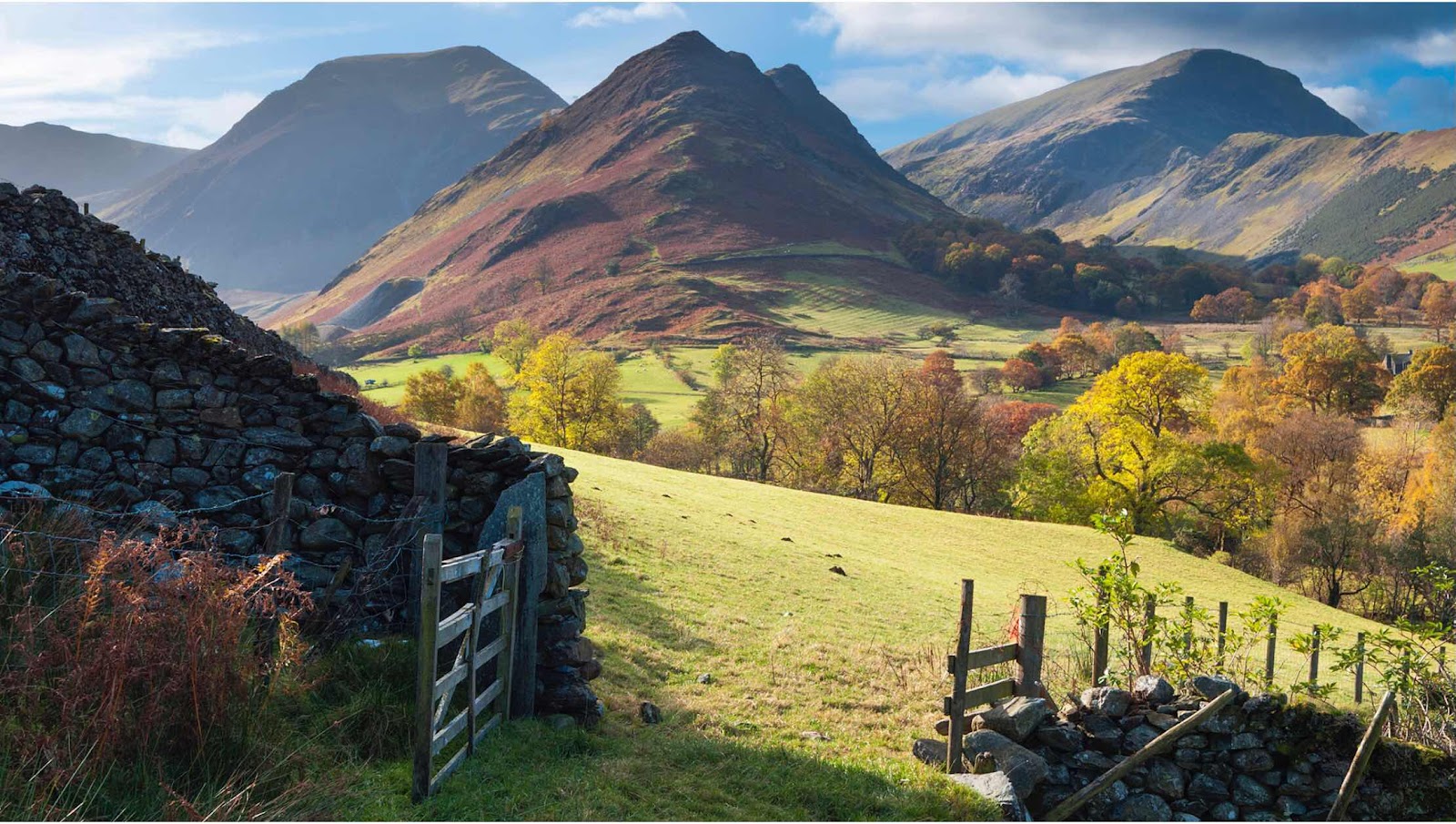
Yeah, this one turned out OK when I stumbled upon this waterfall during a hike…

I don’t know if this was the best lighting, but this picture turned out OK…

I’ve seen more colorful plants than this, but I took this picture anyway…

I know that these are just a bunch of rocks, but not bad, I guess…

Now, our TV does offer us the choice to put up our photos instead of these stock photos, but there’s just no way that my vacation pictures can compete with their photos, although, although, I do love these two pictures that I have taken while on vacation. I just caught these moments at just the right time while walking on two different occasions in the same park.


Today’s psalmist is doing something similar to introduce us to God. This Psalmist is saying, “Just look around you because the heavens are telling the glory of God.”
Theologians call this approach to introducing people to God as “general revelation.” We can know God in a general way through a beautiful sunrise and sunset, through the Milky Way blazing a bright trail across the dark sky, through the sound of a babbling brook or a rushing waterfall, through falling autumn leaves, and in the sound of crashing ocean waves.
In the first five verses of Psalm 19, the Psalmist taps into two of our five senses – sight and sound. And then in verse 6, the psalmist taps into a third sense – touch. We are told how nothing escapes the sun’s heat which of course includes us who can feel its rays on our skin. We not only can see God’s handiwork, we can also feel it!
Every year when I was growing up, my dad loved to go deer hunting in the Central Pennsylvania mountains. He often brought home a deer, but later in his life, he decided to not shoot anymore because it was just as satisfying for him to to be out in the woods and the beauty and quiet of nature.
Penny and I love spending time on our deck because of the woods that surround our back yard. We love watching the leaves change with the seasons. During the warmer months, we enjoy listening to the many different birds sing a concert for us. It’s amazing how that time outside can take off the edge of a busy and stressful day.
We get to know God through the beauty of God’s creation.
But the Psalmist also wants us to know about another very important way that God’s presence is revealed to us. In addition to general revelation, God also is introduced to us through what theologians refer to as “special revelation.”
In verse 7, the psalmist shifts from “general revelation” to “special revelation.” Special revelation refers primarily to how God is revealed to us through the scriptures. The psalmist doesn’t use the word, “scripture” but does refer to other words like instruction, law, regulations, commands, and judgements which all are included in what we know as scripture, the Bible.
While those descriptive words might sound a little intimidating, the Psalmist goes on to offer these positive phrases in describing what scripture can do for us. In verse 7, the Psalmist speaks of scripture as “reviving one’s being” and then in verse 8 as “gladdening one’s heart” and “giving light to our eyes.”
Jesus who came on the scene centuries after this Psalm was written began his ministry by opening the scriptures to the Book of Isaiah that speak about God’s good news in freeing people from oppression and bringing sight to the blind.
The psalmist knows that while creation tells us of God and even identifies God’s glorious nature, scripture gives specificity to who God is. This in turn gives specificity to who we are in relation to God, particularly when it comes to how we are to live and conduct ourselves under God’s desire to make this world new again.
I know that there are many negative stereotypes that churches are overly judgmental and restrictive, but this Psalmist sees scripture very differently. Scripture is life-giving and life-transforming. This is why a third of our church’s ministries here at Athens First include opportunities to learn and study the scriptures together through classes and bible studies.
To be introduced to God is to be introduced to both God’s general revelation through the beauty of creation as well as through special revelation, the holy scriptures.
Both are vitally important if we want to be properly introduced to God. I’ve heard many people say that their sanctuary is a walk through the park or a hike through the woods. And that’s fine, but nature will only take you so far in knowing about God’s saving love for the world through the life, death, and resurrection of Jesus. It’s not an either/or. It’s a both/and. The Psalmist celebrates both general revelation and special revelation.
Our scripture reading from Nehemiah tells of how the people of Israel gathered to hear the scriptures read aloud. They were being reintroduced to the God who had saved them and who invited them to renew their relationship with God.
I love how this scripture passage concludes. After they read the scriptures aloud for all the people to hear, Ezra and Nehemiah say, “and do not be grieved , for the joy of the Lord is your strength.” When we are introduced to God through special revelation, we experience joy and strength.
One of my favorite preachers was the late Fred Craddock. He was from the Disciples of Christ denomination. Not only was he an extremely gifted preacher, he also wrote a book about preaching which I used when I was in seminary. I also had the privilege to hear him preach during a seminar when he was here in Ohio.
In one of his sermons, Craddock tells the story of a young woman who approached him one day. She explained that during her first year at college, she felt like a failure. She wasn’t doing well in her classes, she couldn’t get many dates, and she didn’t have as much money as the other students did.
Then one Sunday afternoon, she decided to end it all by taking her own life. She went to the river near the campus, climbed on on the rail, and was looking into the dark water below.
But just before she jumped, she remembered the words of scripture that she had heard in church, “Throw all your anxiety onto him, because he cares about you.” I Peter 5:7.
It was at that point that she climbed down from the rail and decided to not take her own life. Those words reminded that young college woman that there was a God in heaven who cared for her. Consequently, her life had meaning and purpose.
So, when introducing someone to God, by all means, share your best vacation photos with them, those photos of beautiful sunsets, mountain peaks, and lush meadows. That’s what the Psalmist would do. “The heavens are telling the glory of God; and the firmament proclaims his handiwork,” the psalmist says.
But also don’t forget to point them to the scriptures, God’s special revelation that offer hope, joy, forgiveness, new life, and the good news of God’s saving love for the world. This is the God I want everyone to know.
Being Introduced to God
God of creation, thank you for your presence with us this day. We confess that we often forget that we have been created to be in relationship with you. When we face problems and challenges in our daily lives, why is it that we neglect to allow you to guide and instruct us? Why is it that we do not turn to you, the One who cares about our every need? Why would we not seek out the One who is more than able to walk with us each day? In this time of worship, we are reminded of how blessed we are that you want to be in a relationship with us. Thank you, O God! Amen.