A United Methodist Pastor's Theological Reflections

"But thanks be to God, who gives us the victory (nikos) through our Lord Jesus Christ." - I Corinthians 15:57


Monday, April 8, 2024

Sunday (April 7) Pastoral Prayer

April 7, 2024
Beulah UMC & Oak Grove UMC

O Risen Christ, during this time of prayer in which we lift up to you all of those who are on our church’s prayer list as well as other prayer needs that we have shared this morning, may they each hear your reassuring words, “Peace be with you.”


For the people we encounter in our everyday lives, may they each hear your reassuring words, “Peace be with you.”


For when we are facing a difficult decision and in need of your guidance and direction, may we hear your reassuring words, “Peace be with you.”


When our hearts are heavy with remorse because our words and actions have been hurtful toward others, may we hear your reassuring words, “Peace be with you.”


When we are experiencing grief and loss and in need of comfort and hope, may we hear your reassuring your words, “Peace be with you.”


When our doubts and fears overwhelm us, and we wonder if our faith is even real, may we hear your reassuring words, “Peace be with you.”


When the sun is eclipsed by the darkness of this world, may we hear your reassuring words, “Peace be with you.”


When the joy and happiness of Easter becomes overtaken by worry, anxiety, and unease, may we hear your reassuring words, “Peace be with you.”


When we don’t know what to pray for or how to even begin to pray, may we hear your reassuring words, “Peace be with you,” and then join in saying the prayer that you taught us to pray together…


Our Father, who art in heaven, hallowed be thy name. Thy kingdom come. Thy will be done on earth as it is in heaven. Give us this day our daily bread and forgive us our trespasses as we forgive those who trespass against us. And lead us not into temptation but deliver us from evil. For thine is the kingdom and the power and the glory forever. Amen.


Monday, April 1, 2024

Sermon (March 31/Easter) “Fear and Joy” by Rev. Robert McDowell


March 31 (Easter), 2024 Sermon

Rev. Robert McDowell

     Whenever I hear the gospel account of that first Easter, so many emotions surface to the top.  These emotions are so powerful, you can almost touch, smell, and taste the events of that first Easter morning.

     Easter.  The biggest day in world history.  Far bigger than even Christmas.  Easter.  The day death died.  I want to take you back to that distant Sunday morning, the first day of the week, when the dew lay heavy, the sun was warming up, the birds were shaking sleep away with the thrill of dawn, and all of creation breathed in the smell of anticipation.

     Two people rose early, their sandaled feet covered with dust.  They went to the tomb, and met an angel, who broke open their whole world, saying, “He is not here: he is risen.”  Feel the intensity of their emotion: smell it.  

     Matthew, the gospel writer, tells us what they did and what they felt.  They ran, with fear and great joy.  With fear and great joy.  And we can see them running, with fear, with the hasty, gulping breath of fear, and with gurgling joy, with the outstretched hands and billowing cloak and squealing yelps of joy.

     Fear and great joy: at the heart of the resurrection.   

     I’ve been thinking about how much the bible addresses the emotion of fear.  Fear is interwoven throughout the pages of scripture.  And no one seems to be immune from its hold upon us as we go through life’s peaks and valleys.

     There’s the fear of judgment.  Adam and Eve, banished from the garden.   Cain, discovered to be a murderer.  David, exposed as a scheming adulterer.  Israel herself, thrown into exile as a result of her own sin.  

     The fear of holiness.  Moses meeting God in the burning bush and on Mount Sinai in a dark cloud amid thunder, lightning, fire, and smoldering cloud.  Shepherds keeping watch over their flock by night, and an angel needing to tell them, “Do not be afraid.”

     Fear of taking a risk, like the third servant in the talent parable who buried his talent in the ground out of fear.  Terrible fear.

     Then, there’s fear of the unknown.  A stone rolled away, a mysterious presence of an angel, the shaking of the earth, soldiers confused. 

     And yet, great joy.  After forty days of rain and 150 days of flood, Noah sends out the dove and it returns with an olive branch.  After the shame of the tower of Babel, God calls Abraham to be the father of a nation.  

     As the Ark of the Covenant is brought into Jerusalem, David dances before the Lord.  As Ezra reads aloud the books of the Law to the returning exiles, they weep with joy.  As Elizabeth greets Jesus’ mother-to-be she feels the babe within her leap for joy.

     Zacchaeus, the despised tax collector, ends up picking up his robe and runs home with glee to prepare a kingdom banquet for Jesus.  The father of the prodigal son is bursting with joy when he sees his son, the one who has just squandered his inheritance, off in the distance.  Great, great joy!

     Fear and great joy are at the heart of the resurrection story of Jesus, at the heart of the entire biblical narrative, and at the heart of what it means to be a people of faith.

     Fear that the person who lives down the street and is sure that God doesn’t exist might be right. Fear that we’re just not good enough to be a Christian.  Fear that Jesus calls us to peace when we know all too well how extremely difficult it is to love our enemies.  Fear that Jesus will call us to a new way of living, a new kind of ministry, or carry his cross farther than we think is possible.  So much fear. 

     As I was walking down the hospital hallway after visiting a church member who was a patient there, a stranger abruptly greeted me, “Are you a pastor?”  He had noticed I was wearing a clergy badge.

     As he struggled to keep the elevator door from closing and with a tone of desperation in his voice he said, “Pray for me pastor.  I am going through a divorce, and I’m really scared.  Say a pray for me, pastor.”  

     As he was losing his grip on the elevator door, I quickly said, “The peace of Christ be with you.”  As I continued down the hallway, I kept thinking about the expression on this man’s face.  

     Fear.  Horrifying fear!  Yes, we all know fear.

     And yet, also great joy.  Joy, when you discover that love isn’t just a fleeting feeling but that it became flesh in the person of Jesus Christ.  Joy, when after years of living under the burden of guilt and self-hatred for something you’ve done, you finally hear the words, “You are forgiven” and you now know it to be true.

     Joy, when in the midst of your anger and frustration at how the world isn’t the way it’s supposed to be, God calls your name and says, “This is what I want you to do,” and you realize that you are being invited to play a part in God’s story after all.

     Joy, when a family stricken by death, can somehow gather with the pastor at the church and through the telling of shared stories, can begin to laugh again, and celebrate the life of one who has touched each of them in so many special ways.

     Joy, when you’re going through a very dark time in your life and someone leaves a card or brings some food, or gives you a look which says, “I don’t know you very well, but we’re both part of the body of Christ, so I’m here for you.”

     Joy, when a person says to you, “I don’t know if it’s something you said, or in something you showed me through your actions, but I’ve come to believe in Jesus because of you and my life has been transformed.”  Joy.  Fabulous joy!

     Fear and great joy: at the heart of the story of Easter, and at the extremes of our hearts today.  So much to fear, so many reasons to be afraid.  

     Fear for ourselves, that the hole in our hearts will turn our faith into dust and our hope into cynicism. Fear for those around us.  Fear that we feel so powerless.  So vulnerable.  So helpless.  Fear that we won’t know what to say to a friend whose loved one recently passed away. Fear that our hidden fears will be exposed.

     And also, great joy.  Great joy!  Joy of a lamb finding its rickety feet in a meadow.  The joy of a baby discovering how to swallow.  The joy of the song, when we have the words and God has the tune.  The joy of friendship, of those we have known and have loved through thick and thin. 

     The joy of forgiveness, when bitterness and failure do not get the last word.  The joy of creation, when we hear birds chirping on a spring morning. The joy of giving someone a hug when they were expecting a simple handshake. The joy of suddenly realizing that God really did answer a prayer that you have been lifting to God for a long time. 

     Great joy.  Great, great joy.

     So here we are friends.  We are at the moment when the angel’s words break open in our lives, and we start to run with fear and great joy.  

     Fear and joy, the two poles, the two extremes of our human response to the awesome intimacy of God.  Fear and joy run with us throughout our lives together, as constant reminders of the cost and promise of following Jesus.  Fear and joy, at the center of our deepest longings and at the very heart of our desires.

     But there is a secret.  

     It’s a secret that we only glimpse at in this life.  It’s a secret that was first revealed to those two early risers on the first day of the week, while all creation breathed in the aroma of anticipation.  It is the secret of Easter.  It is a secret that I pray we will realize and embrace in the midst of our heavy hearts today.  It’s a secret that is the climax of our gospel.  A secret of the mystery of fear and joy.  

     And the secret is this… Joy wins.  

______________________________________________

Note: Portions of this sermon have been incorporated from the April 8, 2007 sermon, “Fear and Joy” delivered by Rev. Sam Wells, Dean of Duke Chapel, Duke Divinity School, Durham, NC.

Sunday (March 31/Easter) Pastoral Prayer


March 31, 2024
Beulah UMC & Oak Grove UMC

O God, just as our worship service began by proclaiming, “Alleluia,” we continue to sing our “Alleluias” to you because Christ the Lord is risen today! Our lives will never be the same because of the good news of Easter. Sin and death have been defeated. And we are your Easter people!


May every Easter Lilly, every Easter basket, every Easter egg, every chocolate bunny, every jellybean remind us of the good news of Jesus’ resurrection.


When grief and heartache weigh heavy upon us, remind us of the good news of Easter.


When depression and worry overtake us, remind us of the good news of Easter.


When life’s challenges hit us hard, remind us of the good news of Easter.


When prayers feel like they are going unanswered, remind us of the good news of Easter.


When hopes and dreams have been shattered, remind us of the good news of Easter.


When our sins and guilt get the best of us, remind us of the good news of Easter.


When fear does everything it can possibly do to rob us of joy, remind us of the good news of Easter.


O God, open our hearts and minds so that will will notice and celebrate the reminders that you send our way of the good news of Easter.


Like this prayer that Jesus taught us to say together…


Our Father, who art in heaven, hallowed be thy name. Thy kingdom come. Thy will be done on earth as it is in heaven. Give us this day our daily bread and forgive us our trespasses as we forgive those who trespass against us. And lead us not into temptation but deliver us from evil. For thine is the kingdom and the power and the glory forever. Amen.

Friday, March 29, 2024

Sermon (March 28/Maundy Thursday) “A Very Unique Meal” by Rev. Robert McDowell


Maundy Thursday
“A Very Unique Meal”
Rev. Robert McDowell
March 28, 2024

    Maundy Thursday is an important day during Holy Week.  It’s a time for us to remember when Jesus shared in a last supper with his disciples. Soon, he would be arrested by the Roman authorities and crucified on a cross.  This last meal has become a meal we continue to receive to this day to help us reflect on what Jesus’ suffering and death mean for us.

   This is why the Apostle Paul spends time writing about the Lord’s Supper in his letter to the Christians in the city of Corinth.  They had forgotten why the Lord’s Supper is a very unique meal.

     In Paul’s day, the Corinthian Christians would have met in homes to worship, eat a meal together, and receive the Lord’s Supper.  The bread and the cup were part of that much larger meal they would have had together. 

     Somewhere along the way, they forgot the reason why they were gathering for a meal in the first place.  They forgot why the loaf of bread and the cup were part of that great spread of food.  This holy meal that was meant to remind them of their oneness in Jesus Christ had become just another meal. 

     And so, Paul reminds them of the meaning of this meal by saying how it was Jesus who offered his body and his blood for us so that we will always remember what he did for us when he died on the cross for the world. 

     Paul is saying that whenever you see the bread and the cup on that table of food, to remember that this is why we have gathered in the first place.  We have gathered because of what Jesus has done for us.

     In my first church where I served as pastor, I was celebrating the Sacrament of Holy Communion one Sunday morning. We were serving by intinction where people come forward to a communion station, take a piece of bread, dip it into the chalice of juice, partake, and then return to their seat. I was serving at one of those communion stations.        

     One of the beautiful things about the intinction method is that it is a very personal experience as people come forward one by one to receive the Sacrament.  It is also a very meaningful time for me as pastor because when I offer the bread and the cup, I can make eye contact with each person as they receive the Sacrament.

     So anyway, I was serving Holy Communion at one of the stations and one of my older members who was in her 90’s was in my communion line. As a life-long member of the church, she was seen as the matriarch of our small congregation.

     When it was her turn to receive, I lovingly looked into her eyes and said, “Florence, this is the body of Christ broken for you.”  She received the large piece of bread but then accidentally dropped it on the floor.  So, I offered her another piece of bread which she received.  

     Then I offered her the cup and said, “Florence, this is the blood of Christ shed for you.”  She then dipped the bread into the chalice and ate. And then she did something that I will never forget.  

     She looked down at that large piece of bread that she had accidentally dropped on the floor.  I assumed that she was going to gently bend over and pick it up since it would be in the way of the person behind her.  

     To my great surprise, she quickly swung back her foot, and with all of her might, she kicked that piece of communion bread as far away as possible. As she started to go back to her pew, she gave me a little smile as if to say, “Problem solved.”

     I know she thought she was doing a helpful thing but all I could think about was, “I can’t believe dear Florence just kicked the consecrated loaf of Christ.”

     The Apostle Paul wants us to know that Holy Communion is a very unique meal. He sums up the meaning of this meal in the last verse of our scripture reading when he writes, “For as often as you eat this bread and drink the cup, you proclaim the Lord’s death until he comes.”

     The Sacrament of Holy Communion has a past, a present, and a future dimension.  When we receive the bread and the cup, we remember the past and how Jesus died on a cross for the sins of the world.  

     When Jesus died on the cross, he allowed all of the pain, brokenness, and sin of the world to rest on his shoulders, so that he would be able to defeat its power once and for all.

     The cross reminds us of how deep our vulnerability to sin is.  It also reminds us of how costly love is.  Jesus was willing to do for us what we were not able to do for ourselves.  He broke the power of sin and death.

     Whenever I get discouraged or experience disappointments, all I have to do is think of the cross and I am reminded of God’s great gift of love through Jesus Christ.  

     Approximately two thousand years ago, Jesus, the one who was the visible expression and true embodiment of God gave his life for you and me. What Jesus did is rooted in human history.

     But Holy Communion also has a present dimension.  The Apostle Paul writes that we are to receive the bread and the cup.  By receiving Holy Communion, it’s a way for us to know and experience God’s saving love in the here and now.  

     We believe that the Sacrament of Holy Communion is one of the means of grace by which God offers his love and grace to us anew. Every time we receive the Sacrament, we can have an assurance that God will be present with us just as he was present with Jesus and the disciples in the Upper Room 2,000 years ago.

     And Holy Communion also has a future dimension.  In the last verse of our I Corinthians scripture reading, Paul writes, “For as often as you eat this bread and drink the cup, you proclaim the Lord’s death until he comes.”  Those last three words are so important in helping us to understanding the meaning of this Sacrament.  “Until he comes.”  

     Whenever we receive the bread and the cup, we are reminded that there will be a day when Christ will return and all of God’s people will feast at his heavenly banquet.  This is the ultimate hope of our faith that one day God will make all things new, and it will be a time when there will be no more suffering, sadness, mourning, sin, and death.

     Every time we receive this Sacrament, it’s a time for us to look forward to that time in the future when there will be new heavens and a new earth. And until that time, we are called as the church to live out our faith and share this hope with others.

     Somewhere along the way, the church at Corinth forgot that this was a very unique meal.  Maybe it was good that they forgot, or we wouldn’t have this scripture from Paul to help us understand the meaning of this meal.

     During church camp one year for elementary age children, a pastor noticed that that one of the children was always misbehaving, even during their worship time in the evening.  One of the counselors explained this boy’s story with the pastor.

     This boy whose name was Adam, along with his brother were staying with their grandparents because their parents had recently divorced.  The grandparents thought that it would be good for her grandchildren to attend church camp.  The boys had never attended church, so all of this was very new to them.

     To help the situation, the pastor and this counselor partnered Adam with a high school counselor whose name was also Adam.  Big Adam was to help explain to young Adam why they were doing the camp activities and why they had closing worship each night. This high school counselor helped changed little Adam’s behavior. 

     On the final evening of worship, they all celebrated Holy Communion.  Each camp family picked two persons from their group to serve Communion to the other members. 

     As young Adam’s group came forward, the pastor asked for the two persons to come and join him at the altar to receive the communion elements to serve to their family.

     Little Adam was one of those chosen. The pastor served him and the other student, and then he handed the elements to them to serve their camp family.  

     Tears filled this pastor’s eyes as he watched this young student serve the bread and the juice and share the words of communion to his group. 

     This young boy who was going through a very difficult time in his life was experiencing transformation and newness of life, all because somebody took time to come alongside of him.

     On a Maundy Thursday several years ago, I took my Holy Communion kit with me to a rehab center to visit a retired United Methodist pastor. I just thought that he would like Holy Communion since he wouldn’t be able to attend our Maundy Thursday service that night.

     When I arrived at the rehab facility, he was having his therapy session. Fortunately, he was taking a break, so we had time to talk. He was so glad to know that I brought my Holy Communion kit.

     As I got out my communion kit to set things up on one of the tables, his physical therapist came over to us and my pastor friend introduced me to her. Looking at my communion kit, she asked me if I always take the Sacrament with me during my visits.

     I told her that I brought it because it was Maundy Thursday and I thought Clarence would like to receive the Sacrament to remember Jesus’ Last Supper. She said, “Today is Maundy Thursday? I should have known that! Do you have enough for me?”

     I said, “Sure. Pull up a chair and join us.” I was about ready to offer a communion prayer when another patient came over and asked, “Mind if I join you?”

     No sooner had this man joined us that another staff member noticed what was going on and said, “I’ll come over, too if that’s OK!”

     So many joined us for Holy Communion in that physical therapy room, that we almost needed to have ushers and acolytes!

     There is something very unique about this meal, isn’t there?

     It’s a meal that is rooted in the past when Jesus died on the cross for our sins. It’s a meal that includes the present because Christ promises to be with us whenever we receive it. And it’s a meal that points us to that future hope when one day, we will all feast at Christ’s heavenly banquet together.

     Past, present, and future. It’s all part of this meal that we call, “Holy Communion.”

Maundy Thursday (March 28) Pastoral Prayer

March 28, 2024
Beulah UMC & Oak Grove UMC

O God, we are wondering if there is a place at the table for us tonight. Is there room for me? Will there be enough room for us? Did we first need to make reservations? Or have you figured all that out and there will be more than enough room for sinners like us to come to the gospel feast? Thank you for inviting us and for providing a space for each one of us here in the Upper Room right next to your disciples.

We come to you as fellow beggars who have at least one important thing in common; we are all in need of your grace. And so, we come in humility. Nothing in our hands we bring, simply to thy cross we cling.

Thank you for your cross that reminds us of the depth of your love for us when Jesus died for our sins. Thank you for this holy meal in which you are present with us as we receive the bread and the cup. And thank you for the future hope we have that one day, we will feast at the heavenly banquet with you and all of your people, that time in the future when there will be no more suffering, sadness, mourning, sin, and death. We long for that time when you will make all things new in heaven and earth.

And until that time, we continue to lift up to you the pain, brokenness, and needs of those who are on our hearts and minds. We lift up to you those who are facing illnesses and in need of healing, and in particular all of the people who are on our church’s prayer list. Just as you are present with us tonight as we prepare to receive the Sacrament of Holy Communion, be present with all who are in need of your care and love, especially in places in our community and world where there is so much pain and suffering.

Tonight, we join people in our community and all around the world who like us, are receiving the bread and the cup, a very holy and unique meal in which we are invited to receive your wondrous love anew. We pray this in the name of Jesus who taught us to pray together…

Our Father, who art in heaven, hallowed be thy name. Thy kingdom come. Thy will be done on earth as it is in heaven. Give us this day our daily bread and forgive us our trespasses as we forgive those who trespass against us. And lead us not into temptation but deliver us from evil. For thine is the kingdom and the power and the glory forever. Amen.

Monday, March 25, 2024

Sermon (March 24/Palm Sunday) “Crosses of Jesus: The Crucifix” by Rev. Robert McDowell


March 24 (Palm Sunday), 2024 Sermon
Rev. Robert McDowell

     As we conclude our “Crosses of Jesus” sermon series in which we have looked at the Latin Cross, the Jerusalem Cross, the Tau Cross, the St. Andrew’s Cross, and the Celtic Cross, we focus this morning on another cross of Jesus which is known as the Crucifix.


     First, a bit of history.


     Archaeologists have found no evidence of the image of a crucified Jesus used in Christian worship until the 5th century.        In fact, the early Christians avoided the use of even a plain cross.  For one thing, the shape of the cross was still the form of capital punishment used for non-Roman citizens throughout the Roman Empire.  And to highlight such a gruesome symbol in that time period could have easily been too overpowering for people to absorb.


     Also, to use a cross as a Christian image would have drawn attention to oneself as a follower of Jesus, a dangerous thing to do during times of persecution for Christians.


     For this reason, early Christians identified themselves with the sign of the fish.  Some of Jesus’ disciples had been fishermen:  Peter, Andrew, James and John.  Jesus invited them to become his disciples and told them that they would no longer catch fish.  Instead, they would fish for people and encourage them to become followers and disciples of Jesus Christ.


     Early Christians could mark their homes or businesses with a fish and other Christians would know that they could safely talk about Jesus together.  But pagans throughout the Roman Empire might just assume that they were fishermen by trade, or that it was just a decoration.

     The earliest representations of a cross used in Christian imagery were made using an anchor.  You can see that there is the shape of a cross hidden in the design of an anchor. Also, by introducing an anchor as a Christian symbol of the cross, Christians were able to keep within the fishing and sea imagery that they had already been using.  


     In addition, our faith reminds us that Jesus is the Lord of all and who keeps us secure in the midst of life’s storms.  Hence, the anchor is a very good Christian symbol, and it too, could be used safely by early Christians without facing persecution.


     When early Christians did try and represent Jesus crucified, they did not use an image of the body of Jesus nailed to a cross.  Rather, they used the image of a lamb, the Passover Lamb.  They understood the symbolism of the Passover Lamb from the Old Testament, and that Jesus was the perfect Lamb of God crucified to take away the sins of the world.  Often, the lamb is shown carrying a banner.


     In the fourth century, the Roman Emperor Constantine converted to Christianity, and the persecution of Christians came to an end in the Roman Empire.


     In the fifth century, the Western Roman Empire fell after years of invasions by many northern Germanic tribes.  Finally, the empire fell completely when the Visigoths invaded.


     The earliest depictions of the crucified Jesus in the Middle Ages show him with his eyes open and with no trace of suffering.  Although the humanity and the divinity of Christ was an accepted doctrine of the Church during this time, emphasis was generally placed on Christ’s divinity and that’s why Jesus tended to be painted without any emphasis on his suffering and death.


    By the thirteenth century, there was increasing theological importance placed on the incarnation of Jesus, or his taking on of full humanity.  Depictions of the crucifixion began to portray Jesus’ twisted body, and his bleeding on the cross.  The crucifix became the centerpiece in most churches and cathedrals and became the favored object of devotion and contemplation for the mystics. 


     Some historians believe that depictions of the crucifixion of Jesus became more realistic during the Middle Ages because the Great Plague had ravaged across Europe and killed more than one-third of the population with an agonizing and unstoppable death.  European artists became fascinated with depicting death.


     Then, during the Renaissance, Jesus’ depiction on the cross was transformed once again according to the prevailing optimistic spirit of that era.


     The Protestant Reformation of the 16th century put a divide in the use of portrayals of the crucifixion between the Roman Catholic and Eastern Orthodox Churches on one hand, and Protestant Churches on the other.  Protestant reformers got rid of crucifixes in their churches, and in the case of John Calvin’s followers, even plain crosses were banned.   


     Crosses have again become prominent in most Protestant Churches, although a few still adhere to strict “no ornamentation” beliefs.  However, the crucifix has remained almost exclusively associated with Roman Catholicism.  


     Both Protestants and Catholics understand that both the crucifixion of Jesus, and his resurrection are pivotal points of our Christian faith.  And one is meaningless without the other.  If Jesus had not been crucified, he could not have been resurrected from the dead.  And if Jesus had not been resurrected from the dead, he would have been just another Jewish man crucified by Roman authorities.


     So, what can we learn from the Crucifix?


     A crucifix is a Latin cross with the body of Jesus, called the Corpus hanging on it.  It signifies the sacrifice that the Son of God willingly made on our behalf.  It reminds us of the incredible agony and suffering that Jesus endured to take away our sins.


     This type of capital punishment was known to be brutal and painful over a long period of time.  And Jesus, being fully human, felt every bit of its pain and torture.


     This was capital punishment reserved for the lowest people in the empire—slaves, servants, and criminal non-Roman citizens.


     God’s servant to humankind came and died a servant’s death.


    The crucifix also reminds us that we as Jesus’ disciples are also called to live our lives serving others.


     A teacher named Patty Bonds shares her own story of the reason she wears a crucifix. Here is what she shares:


I was assisting in a history class one day shortly after my conversion.  I was wearing a crucifix and the history teacher, who was not Catholic, commented that crucifixes always bother her.  She asked me why we Catholics kept Jesus on the cross when he was risen from the dead.  She expressed her offense at the sight of Jesus hanging there 2,000 years after the fact.


Prompted, I believe, by the Holy Spirit, I broke into a chorus of an old hymn traditionally familiar to many Protestants:


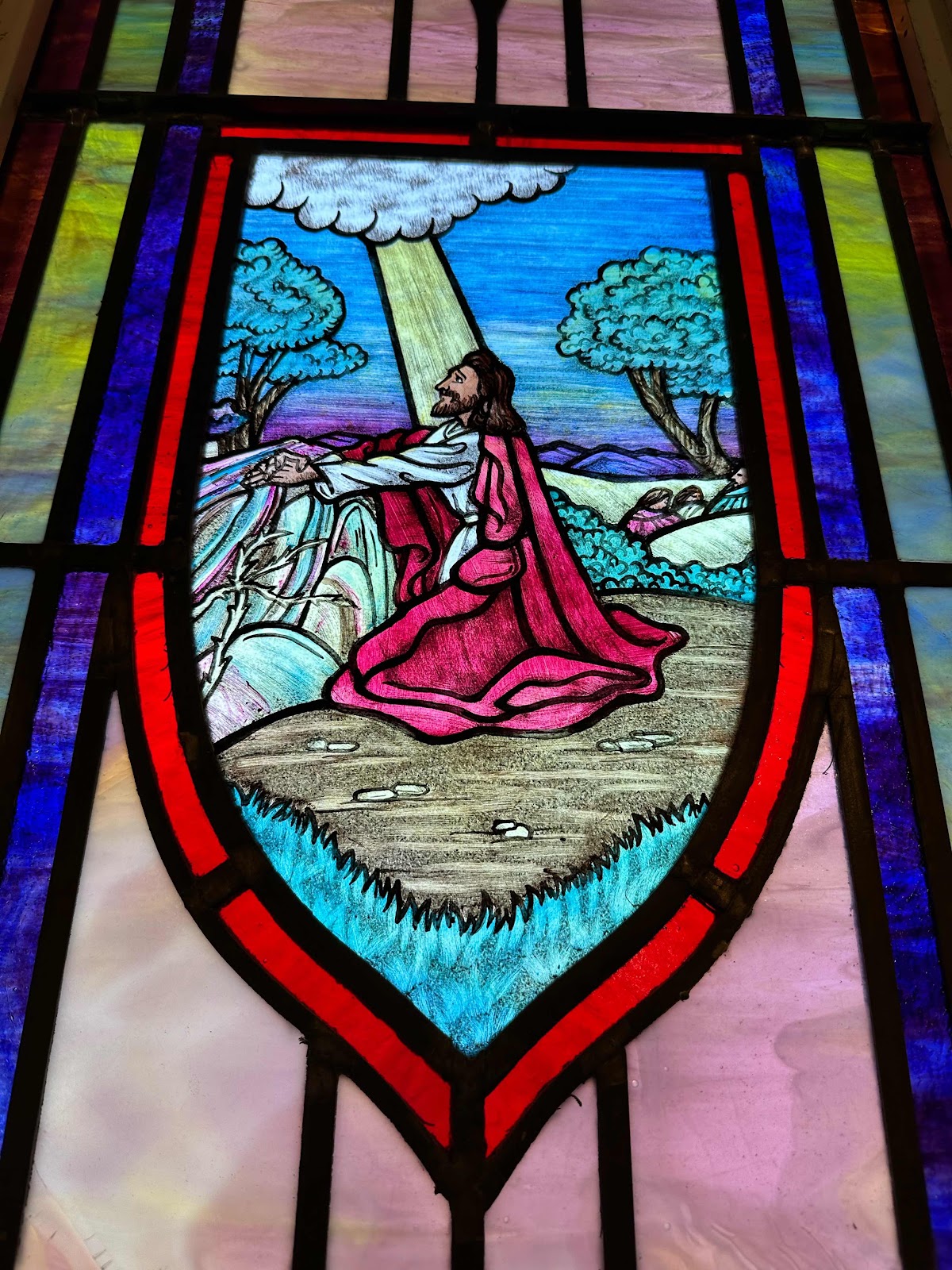
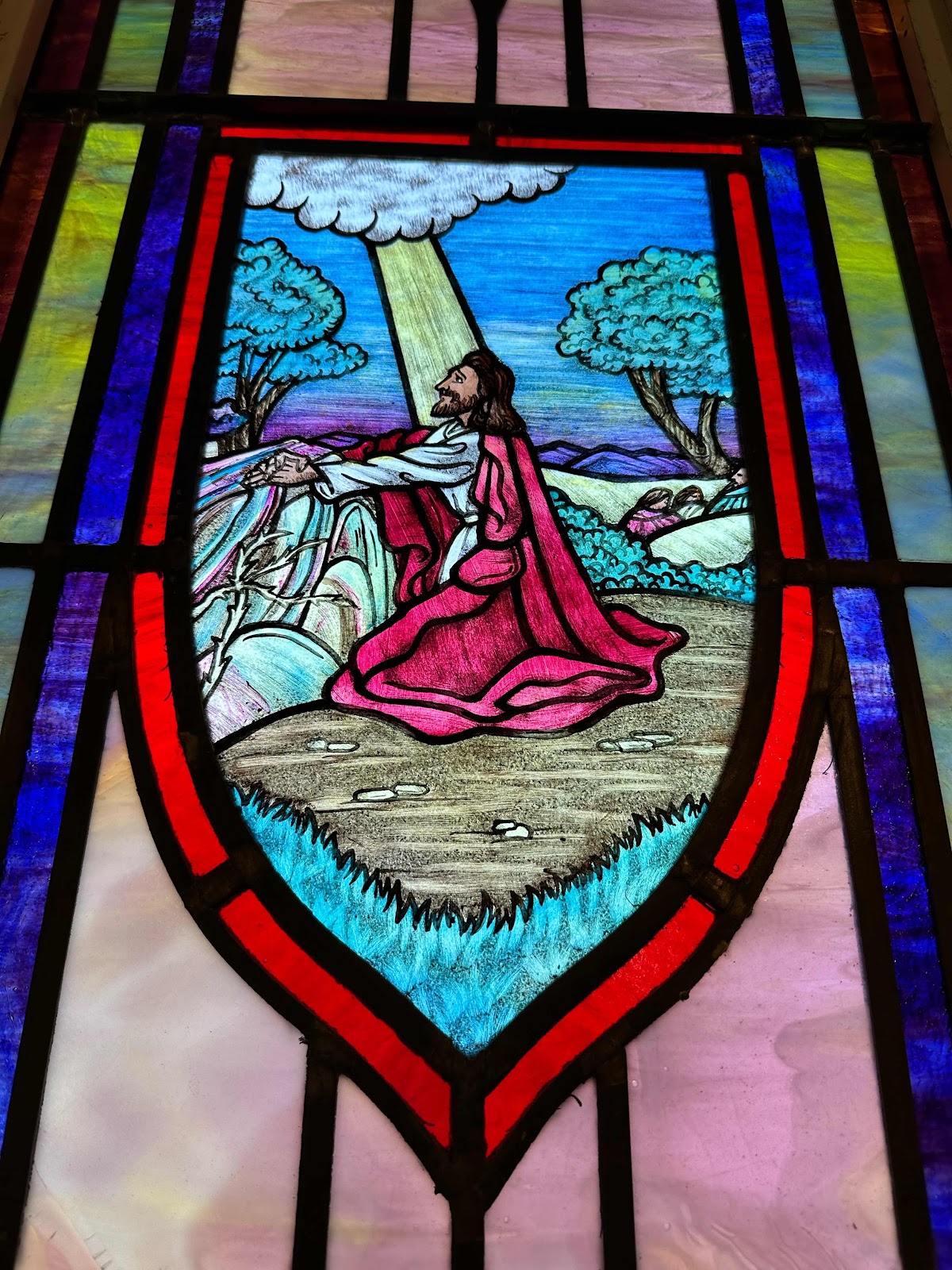
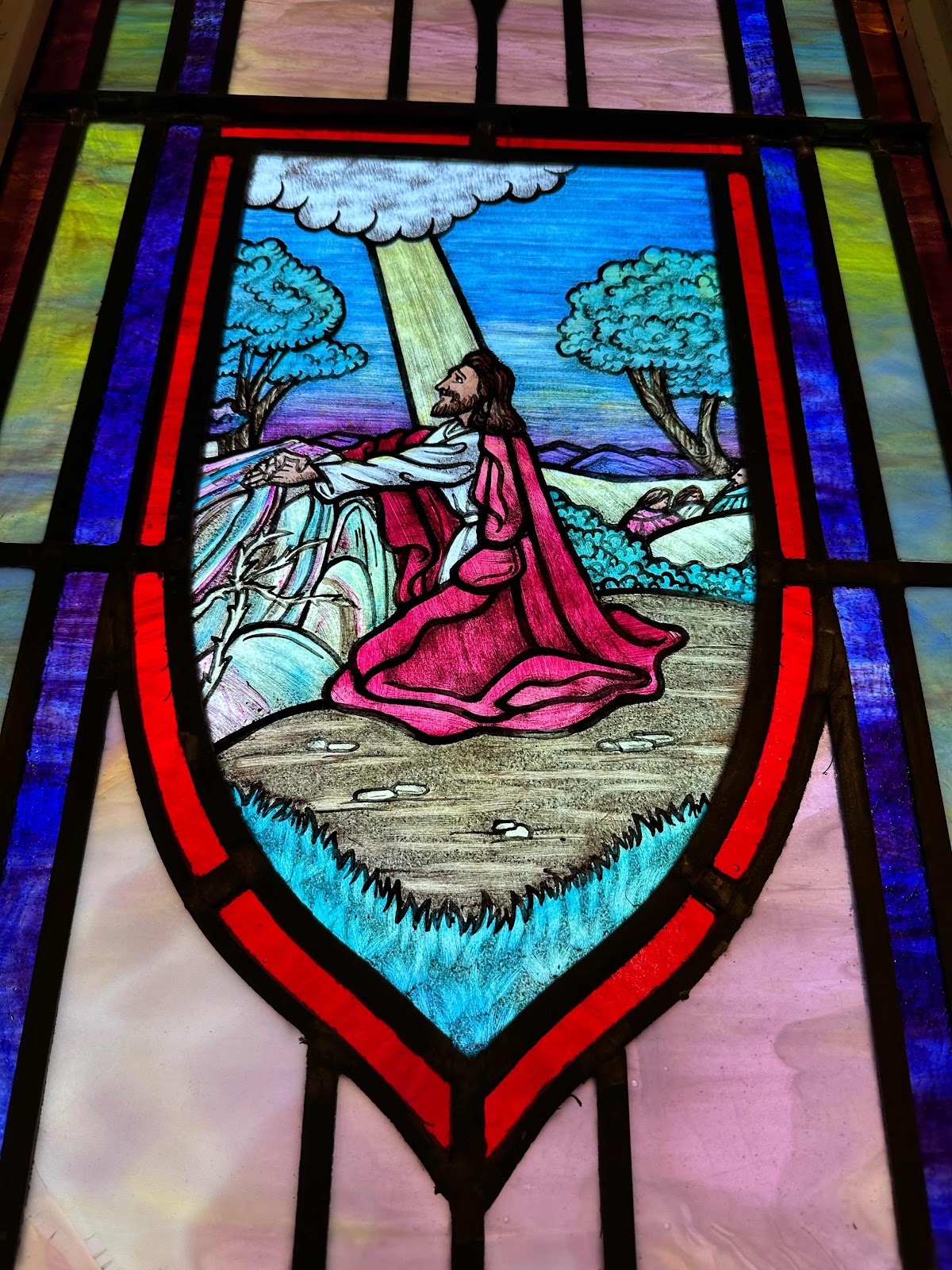
Lest I forget Gethsemane,

Lest I forget thine agony

Lest I forget thy love for me,

Lead me to Calvary.


She walked away with raised eye brows and a pensive nod.


Patty Bonds continued:  Could it be that the sight of the price paid for us makes some very uncomfortable? Could it be that as we look upon Christ giving his last drop of life for us, we realize that we are called to the very same sacrificial life? Could it be that fixation on the resurrection, made “sanitary” by the omission of the crucifixion, allows us to believe we are called to live in painless power rather than in humility and sacrifice?


Could it be that the sight of the crucifix brings to the surface our regard for sin? Should it not be impossible to set our eyes on a crucifix and allow any sinful thought to linger in the same mind that is filled with that sight? Does the sight of our sacrificial Lamb make us feel the pangs of every imperfect fiber of our beings?


 So, it is with gratitude I wear this crucifix. It keeps my heart focused on the lover of my soul; it keeps me submitted to the cross I must take up daily to follow Him; it reminds me how much he loves the rest of the world and how much he wants me to give to reach them.


Lest I forget . . . Lead me to Calvary.”


     This is why we remember both the Palms that were waved during Jesus’ entry into Jerusalem and the Passion of our Lord on this one Sunday.  Lest we forget.


     This is why we will gather for Holy Communion this Thursday and recall the new commandment Christ gave us to love one another, and serve one another.  Lest we forget.


     This is why we pause on Good Friday to ponder what Jesus was willing to do for us when he died on the cross.  Lest we forget.


     Several years ago, a friend of mine traveled to Haiti on a seminary transcultural trip.  It was a trip that changed his life.  My friend shared with me an entry from his journal that he wrote on his last day in Haiti, and I’d like to share it with you.  Here is what he wrote:


“In the afternoon, we went to Cité Soleil, which is the worst, most impoverished part of Port-au-Prince.  I understand that Mother Teresa once described it as being “hell on earth”, and she had obviously seen a lot of impoverished, hellish places.


A woman who sells souvenirs outside of St. Josephs’ Orphanage where we are staying in Petionville, went with us because she lives there.  We sat in the van for about fifteen minutes on the edge of Cité Soleil before we drove in.  The woman and Yvon our translator went into a school for her son or something.


While we sat there, I just watched people. I watched two men sitting next to a pile of garbage of rotten fruit.  There were more flies than I have ever seen in one place swarming over the garbage and landing on the men too.  They seemed oblivious.


I watched an old man pulling a huge wooden cart laden with something.  It was so large and heavy that is seemed to control him.


I watched dozens of children, ages 7-10, fetching water in 5-gallon containers on their heads.  Most seemed very curious about us and would smile and wave brightly when I waved or smiled.  I kept trying to imagine my young daughters Abby or Allie fetching that water and working that hard, and I just couldn’t imagine it.


We drove down to the dock where some small-sized boats were docked.  Some people were bathing in the water, and some pigs were in the shallow water.  The water looked filthy.  


Within sight of the dock is an oil refinery.  Some time ago, the refinery released some waste oil, and it flowed down the central open sewer canal of Cité Soleil. Then, rains came and flooded Cité Soleil causing an oil slick to cover everything.  When the water receded, everything was covered with oil.  The government’s solution was to set fire to Cité Soleil to burn off the oil, but they didn’t warn people.  Several hundred people died.  Everything is wood and so close together.  It would have been horrendous!


We started for the woman’s home who came with us.  We walked over open sewers, down narrow alleys that seemed to form a maze between these little shacks.  People were sitting in the narrow passages; some were bathing or cooking.  Children were amazed to see us, and shouted, “Hey, you!” and ran after us.  Some wanted to hold our hands.  Others shouted, “Blanc, blanc” which means “White, white.”  A woman tried to give her baby to one member of our group because she believed he would have a better life.


For some reason, the thought that went through my mind was that this must have been what the Via Dolorosa was like for Jesus.  The surroundings were utterly depressing and hopeless.  People were calling out; some seemed friendly, others seemed to call out only because we were “blanc”.  


I saw a side of humanity—all of humanity—that Christ died for.  It seemed to be all of the human brokenness in the world, gathered into one place.


The woman’s house was small.  Two dark rooms with no windows.  They were oppressively hot.  They had dirt floors.  Thirteen people live there.  A baby sat on the ground, and I remembered the statistic that most children in Haiti die before their fifth birthday.


The woman showed us the shed where she keeps the things that she makes to sell.  I bought a wooden crucifix which seemed appropriate given that I’d been thinking about Christ’s sacrificial love for the world as I’d walked through those narrow alleys.  


As we left Cité Soleil, I could not find words to express what I had just seen.  The van was very quiet on the drive home.  


That night, I sat up on the roof of the orphanage for a while looking at the lights of Port-au-Prince down below, and the mountains up above.  It dawned on me that God is with us, each of us no matter where we go.  It doesn’t matter if it’s where I live in the United States or Haiti, or anywhere else.  God is there.  More significantly, God is in Cité Soleil, and with God’s people there just as much as he is anywhere else.  


What would it mean for me to identify with the suffering of the people in Haiti’s poorest slum?  What would it mean to take on that suffering, and try to make a difference?


What does it mean for Jesus to identify with the suffering of the whole world?  I am thankful that the crucifix helps me to remember.” 


So ends my friend’s journal entry.


And as we encounter suffering here in our community, throughout the world, and even in our own lives, maybe this is a cross that we need as well.  A cross which reminds us that God knows what it’s like to suffer for the sake of the world.


That’s why we need the crucifix.  Lest we forget.


Sunday (March 24/Palm Sunday) Pastoral Prayer

March 24, 2024
Beulah UMC & Oak Grove UMC

O God, on this day in which we wave our palm branches to welcome you ride into Jerusalem, we are reminded that in just five days from now, we will be reflecting on how you died on a cross for the sake of the world. Even on this Palm Sunday, we are already trembling at the thought of what will happen.


Grant us the courage to walk with you this week to the Upper Room, to Golgotha, and to the tomb. Lest we forget.


Grant us the courage to walk with you this week and reflect on how we betray and deny you. Lest we forget.


Grant us the courage to walk with you this week and be reminded of the great lengths you will willing to go for the sake of the world. Lest we forget.


Grant us the courage to walk with you this week and be mindful of the pain and suffering that we see and hear about throughout this world that you love so much. Lest we forget.


Grant us the courage to walk with you this week as we pray for those on our hearts and minds who are in need of healing, hope, direction, and a new beginning. Lest we forget.


Grant us the courage to walk with you this week and serve others even if it’s as simple as giving someone who is thirsty a cup of cold water, running an errand for a neighbor, being a good listener and helping people feel heard and accepted, offering a word of encouragement to someone who is feeling down, donating food to a shelter. Lest we forget.


And grant us the courage to walk with you this week and join together in boldly praying this prayer that you taught us to say together…


Our Father, who art in heaven, hallowed be thy name. Thy kingdom come. Thy will be done on earth as it is in heaven. Give us this day our daily bread and forgive us our trespasses as we forgive those who trespass against us. And lead us not into temptation but deliver us from evil. For thine is the kingdom and the power and the glory forever. Amen.