
In a ranking of occupations according to the degree of importance and lack of appreciation, guess which occupation was at the top of the list? Being a preschool teacher.
What job can be more important than the task of caring for a class of young children and helping those children to grow and learn in a safe environment where they are loved and nurtured?
This makes me wonder how easy it can be for us to take people and what they do for granted.
During the pandemic, I remember especially being thankful for health care workers, nursing home staff, scientists, and researchers, and many others who were diligently working long and difficult hours on our behalf. This took on a whole new meaning for me during that very critical time.
We all know how important it is to offer praise for a job well done. We are to be generous in our praise. The same is true in giving praise to God.
Psalm 150 is the very last Psalm found in the Book of Psalms. It is a wonderful concluding Psalm. In this very short Psalm of just six verses, the word “praise” appears thirteen times.
In fact, the final five Psalms, Psalm 146 through Psalm 150, all begin and end with the phrase, “Praise the Lord.” It’s like the Bible is sending us a strong message. Be generous with your praise to God.
Psalm 150 answers four questions about what it means for us to praise God. It answers where, why, how, and who.
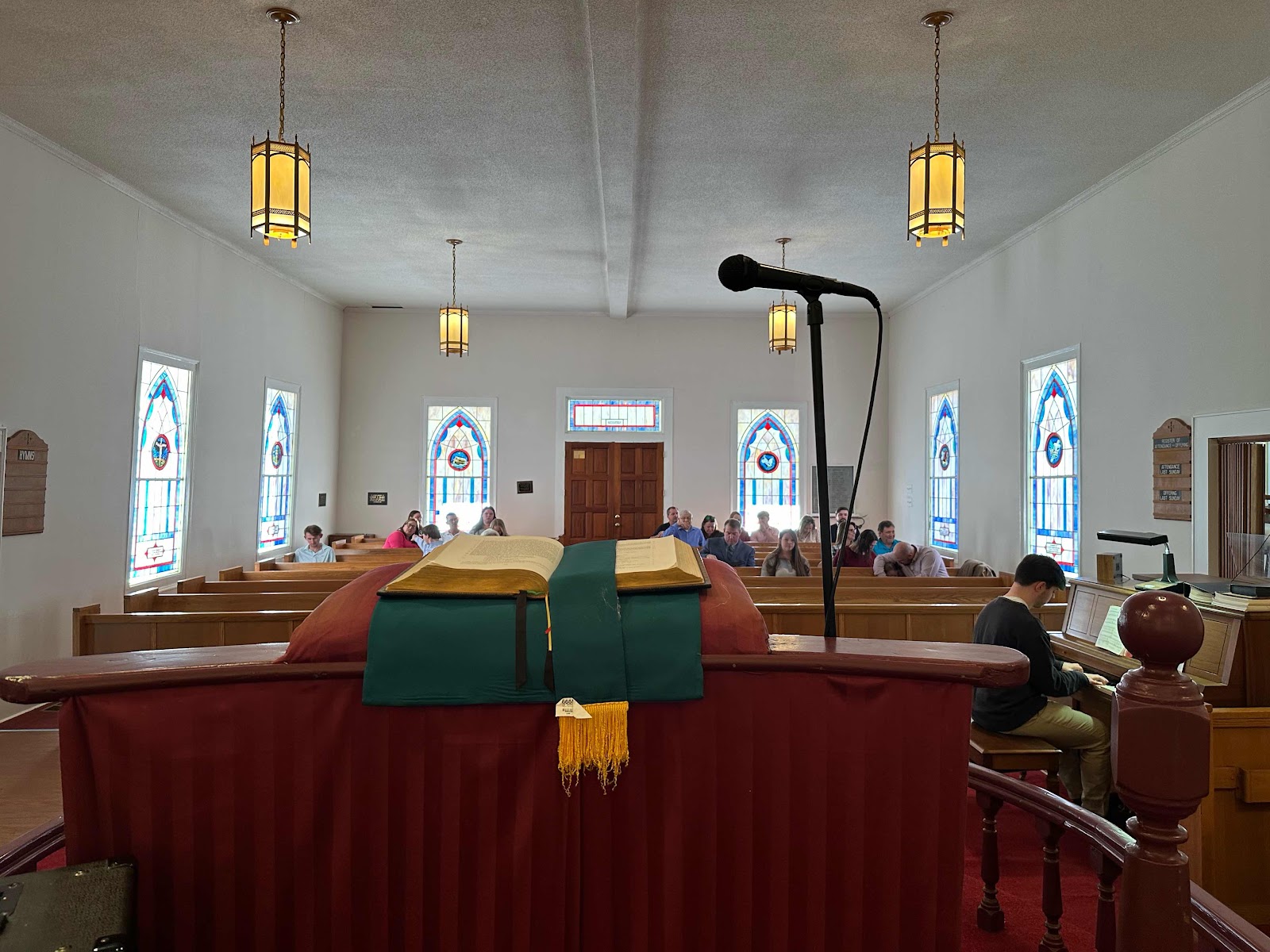
Let’s begin with the “where.” The Psalmist begins by saying, “Praise God in his sanctuary, praise him in his mighty firmament!”
When the Psalmist wrote this, he was thinking about the Temple as the place to worship God. The Temple was the central place where the people of Israel believed God resided. The Psalmist isn’t saying that we shouldn’t praise God in other places, but he is saying that there is something special about worshipping together in one place as God’s people.
In one of the churches I served, I received a note from a church member who wanted me to know how much our church meant to her. She shared how she was going through a really difficult time in her life. She had been discouraged and feeling really down.
She went on to write that she decided to come to the church parking lot late one night, because she knew that the church was a special place for her. So, she parked her car in the lot where she had a full view of the church building.
As she sat in her car and focused on the church, she was able to feel a sense of God’s peace and reassurance that God would help her overcome the problems she was facing at the time. Her church was a haven of blessing and peace for her when she needed it the most.
There is something very special about coming to church every Sunday. God seems to always show up in this place that we call church. No wonder that the Psalmist tells us to praise God in the sanctuary.
In addition to praising the Lord in his sanctuary, the psalmist also calls upon us to praise him in his mighty firmament. In other words, “Praise the Lord out in creation.” I like how The Message translation puts it. “Praise him under the open skies.”
There are moments when we will be taking our dogs for a walk at the park, when it seems like the skies open for us and we can see the indescribable beauty of God’s handiwork. These holy moments lead me to join hymn writer and poet, Stuart Hine in offering these words of praise, “Then sings my soul, my Savior God to thee.”
I have no idea why I didn’t take more walks in the park earlier in my life because I have probably missed out on several opportunities to praise the Lord in his mighty firmament. And by the way, such moments do wonders for your mental, emotional, and spiritual health.
So, the Psalmist answers the “where” question. Where? In God’s sanctuary and in God’s mighty firmament.
The Psalmist also answers the “why” question. Why praise God?
For the why, we go to verse 2 of our Psalm. “Praise him for his mighty deeds; praise him according to his surpassing greatness.”
We are to praise God for his mighty deeds. One of the reasons that this Psalm often appears during the Season of Easter is because the good news of God raising Jesus from the dead qualifies as one of those mighty deeds. God raising Jesus from the dead ranks at the top of “The Mighty Deeds” list.
When the Psalmist wrote this centuries before the time of Christ, he was probably thinking about a number of mighty deeds over the course of Israel’s history like when God parted the Red Sea to lead the Israelites to freedom, or like when God led the people into the Promised Land. We often think of these kinds of mighty deeds when we think about God.
Some people like to refer to God’s mighty deeds as “God sightings” or “Closest to God” moments. They are also known as “Thin Place” moments which refer to how heaven and earth often overlap each other, creating a thin place and we experience God in a very real way through our day to day living.
Where have you been made aware of God’s presence in a very real way?
“Thin Place” moments, “Closes to Christ” moments, “God sightings,” whatever you want to call them, happen to us all the time. Children seem to notice them better than we adults. Sometimes we notice them and sometimes we don’t. Sometimes, it’s only when we look back on something that happened in our lives that we are able to recognize how God was present in a very real way.
Several years ago, I was attending the West Ohio Annual Conference which was held at Lakeside, a scenic cottage community which is along Lake Erie. Annual conference is where United Methodist clergy and laity gather each year to worship and care for matters related to the church.
During that week at conference that year, I was able to spend the day with a dear friend of mine who is a retired United Methodist pastor. I served as his associate pastor several years ago and he has been a spiritual mentor for me over these many years.
It was the first time in five years that he was able to attend Annual Conference due to his failing health. A friend in his church offered to drive him up for the day so that he would be able to reconnect with clergy and laity friends of the conference. His Leukemia had been taking a toll on him and he was using a cane to get around.
I told him that I would buy him an ice cream cone and take him to the pier of the Lake since it was a beautiful day. He walked very slowly, but we finally made it to the pier, and we sat on a bench overlooking Lake Erie and taking in the sunshine and the slight cool breeze of the day.
As we were reminiscing and catching up with each other, a clergy friend of mine was walking by where we were seated. I invited Brian to join to sit down with us and I introduced him to my friend.
Brian asked my friend how long he had been a clergy member of the West Ohio Conference. And my friend said to him, “It’s interesting you should ask me that question because this year is my 60th anniversary of being a member of the West Ohio Conference.”
He then asked him how he came to our conference since my friend had shared with him that he had been raised in Philadelphia. And my friend told him that while he was at Union Seminary in New York City, a clergy representative from the West Ohio conference had traveled to his seminary to recruit students to come and serve in West Ohio.
And when he shared the name of the pastor who recruited him, Brian said, “Oh my goodness, that was my grandfather.” My friend then went on to tell Brian what a great person his grandfather was and that if it wasn’t for his grandfather, he wouldn’t have come to West Ohio.
As I listened to this conversation, I realized that this was one of those thin place moments. This was a sacramental and holy time for all three of us; for my friend because he got to meet the grandson of a dear friend of his, for Brian because he got to hear what a wonderful man his grandfather was, and for me, because my time with my friend that day couldn’t have been scripted any better.
How do you explain serendipitous moments like this? I can only say that it was a gift from God. Or as the Psalmist puts it, one of God’s mighty deeds. We can also call them, “Thin Place” moments.
Why are we to be generous with our praise to God? The Psalmist from Psalm 150 tells us. We are to be generous with our praise because of God’s mighty deeds.
Well, that’s the answer to the “where” and the “why” questions. What about the “how” question? How should we praise the Lord?
The Psalmist gives us a list of musical instruments to help us praise God. In verses 3 through 5, we hear about trumpets, lutes, harps, tambourines, strings, pipes, and cymbals. We even hear about dancing.
It’s interesting to think about the instruments that are listed in our Psalm. It’s a rich variety which I think is intentional on the part of the Psalmist. A tambourine. A harp. Cymbals. Loud crashing cymbals at that.
The Psalmist says that we are to offer our praises to God in a variety of ways.
The Psalmist answers the question of “how.” How? We are to worship with a variety of instruments to help us offer our praises to God.
And the final question. Who? Who is to praise the Lord?
Verse 6 of this Psalm says, “Let everything that breathes praise the Lord!” That narrows it down, doesn’t it?
If you have a pulse, then you are welcome to praise the Lord.
Our denomination, the United Methodist Church has a slogan that has been used in a lot of advertising over the years. “Open Hearts. Open Minds. Open Doors.”
Our church is open to all people because God’s invitation is offered to everyone!
Democrats. Republicans. Independents. Undecided. “Let everything that breathes praise the Lord!”
Long time Christian. New Believer. Seeker. Agnostic. “Let everything that breathes praise the Lord!”
Senior Citizen. High School Senior. College student. Preschool child. “Let everything that breathes praise the Lord!”
White. Black. Latino. Native American. “Let everything that breathes praise the Lord!”
Rich. Poor. Somewhere in between. “Let everything that breathes praise the Lord!”
Methodist. Pentecostal. Catholic. Non-Denominational. “Let everything that breathes praise the Lord!”
Hymn lovers. Praise Singers. Organists. Drummers. “Let everything that breathes praise the Lord!”
Gamecocks, Tigers, insert favorite team. “Let everything that breathes praise the Lord.”
Not too long ago, I was having a conversation with a member of another church, and he said to me, “You know how you and I really like it when someone shows their appreciation to us? Now, just imagine how God feels when his people praise him every Sunday in worship.”
One of the last things John Wesley, the 18th century founder of Methodism said before he died was, “I’ll praise my maker while I have breath.” And he did.
I can’t think of a better ending to the Book of Psalms than Psalm 150. And it’s a perfect way to end today’s sermon.
“Praise the Lord!”


No comments:
Post a Comment