A United Methodist Pastor's Theological Reflections

"But thanks be to God, who gives us the victory (nikos) through our Lord Jesus Christ." - I Corinthians 15:57


Monday, February 17, 2020

Sunday Pastoral Prayer (Feb. 16) Athens First UMC


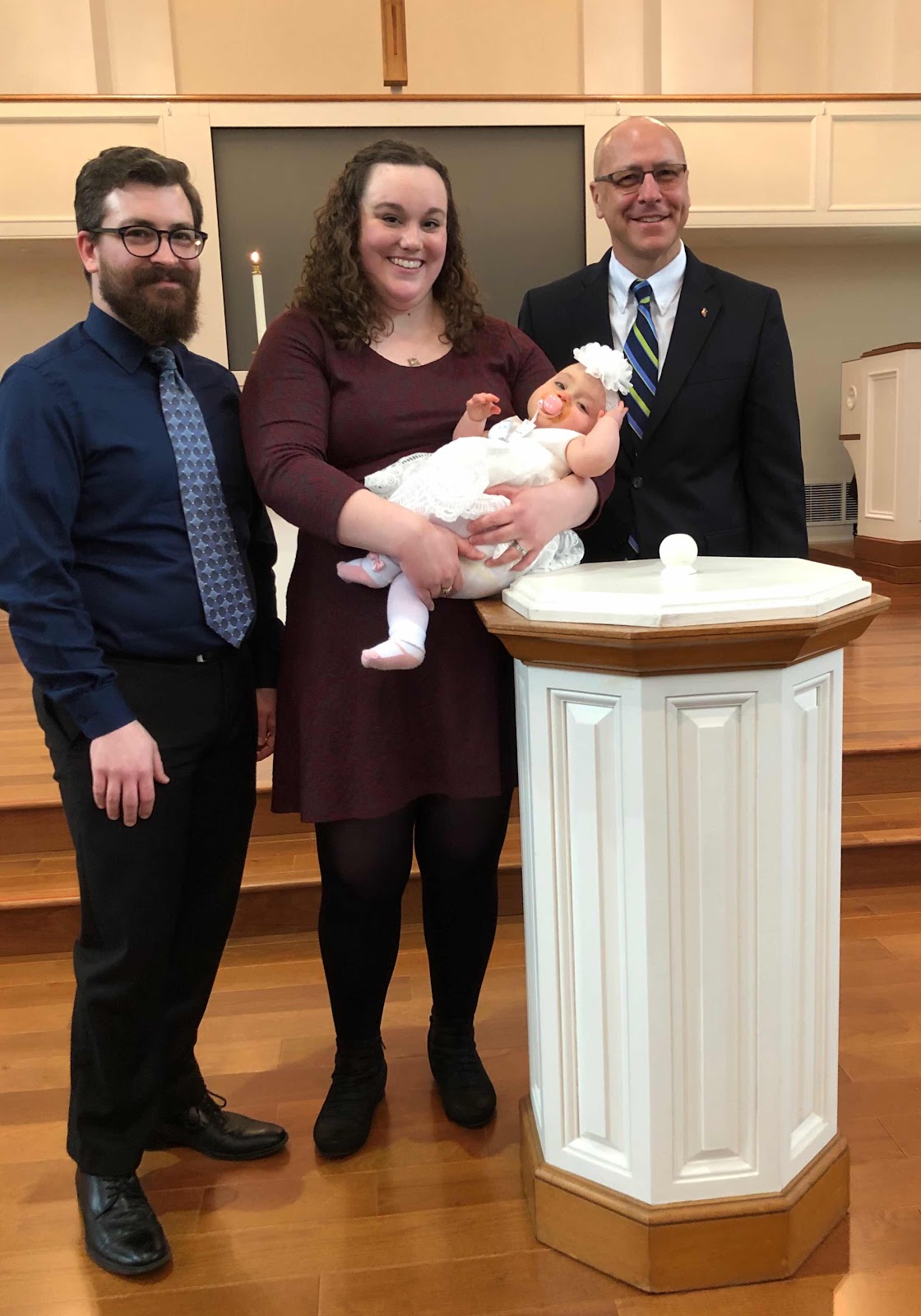
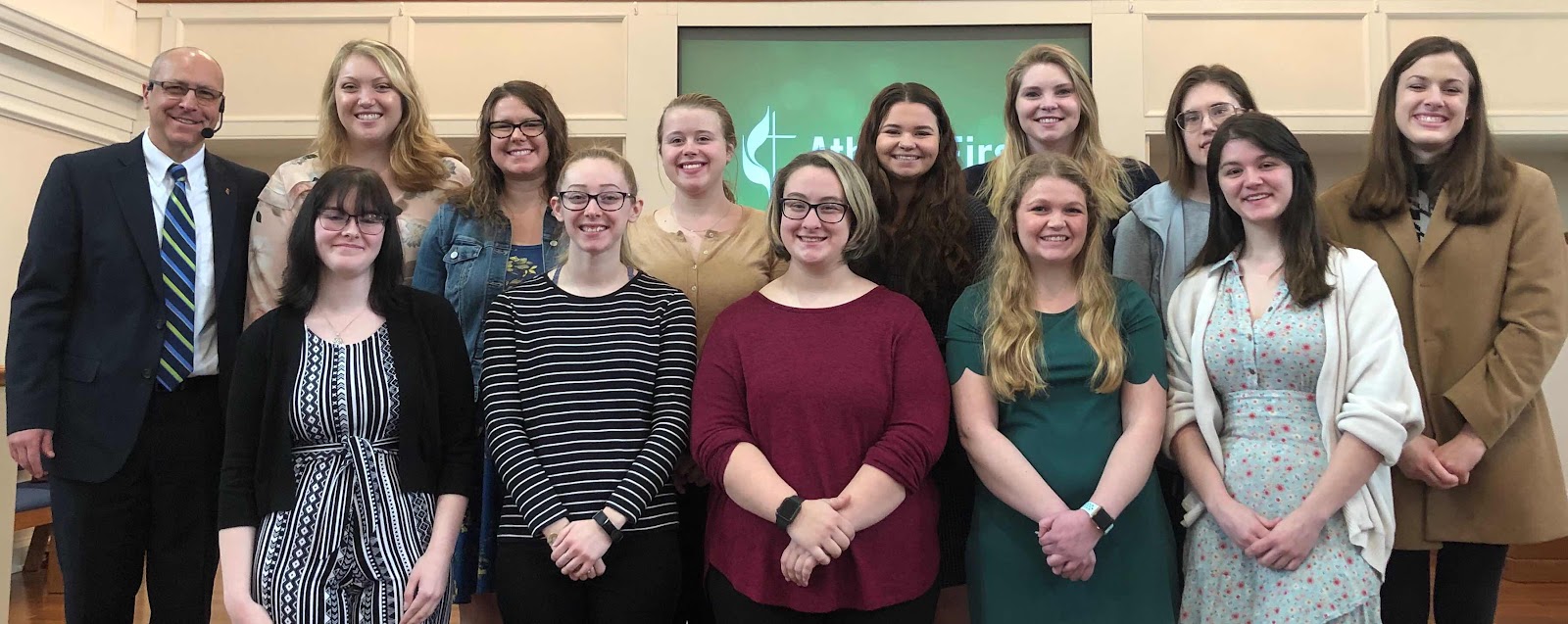
[Sunday was the 2nd week in a row that we hosted one of our church’s partner groups. For this Sunday, it was Kappa Phi, an Ohio University Christian sorority group that holds their meetings and events in our church. They served as greeters, led parts of the worships service and offered special music. You may know them best for their awesome Sunday baked potato and chili fundraiser meals. For the sermon, click hereWe also celebrated the baptism of Elizabeth Bruno, daughter of Alex and Tony Bruno. See picture below. Yes, you can say that it was another special Sunday at Athens First UMC!]


God of love, may today be our best offering ever as we offer to you our hearts that are filled with love, compassion, forgiveness, generosity, and goodness. And where we fall short in this offering to you, we trust in your grace to help us be the people you are calling us to be.


Thank you for Jesus’ teachings that make us think, that lead us to seek reconciliation, and that prompt us to grow in a deeper relationship with you. May this be our offering to you today. We give to you our hearts.


On this Presidents’ Day weekend, we pray for our President. Fill him with the love of truth and righteousness, and make him ever mindful of his calling to serve the people in humility.


We lift up to you those who are on our hearts and minds this morning; those who are recovering from surgery and illness, those who are grieving the loss of a loved one, those who are seeking reconciliation in a relationship, those who feel separated from you, and those who can’t wait for Spring to come. 


We also celebrate this afternoon’s baptism of Elizabeth Ann Bruno, infant daughter of Alex and Tony Bruno. We pray for all who attend that service that we would surround Elizabeth with a community of love and support. 


And we are so grateful for our Kappa Phi sisters in Christ who bless our church and our community in so many ways. Thank you for their presence here with us this morning.


O God, as we prepare to receive our morning offering, may we offer our gifts to Jesus and his love that is so amazing and so divine.


We join together in praying the prayer that he taught us to say together, “Our Father, who art in heaven…”


[Tony and Alex Bruno with their daughter, Elizabeth Ann who was baptized this Sunday. We surrounded Elizabeth with a community of love and support.]

Sunday, February 16, 2020

Sermon (Feb. 16) by Rev. Robert McDowell

     One of the parts of a worship service that rarely gets the attention it deserves is the offering. Rarely do you hear someone say after church, “Wow, the way we collected the offering this morning was especially meaningful to me.”

     “Hey, you should come to our church on a Sunday morning and check out how we receive the offering. Very impressive!!”

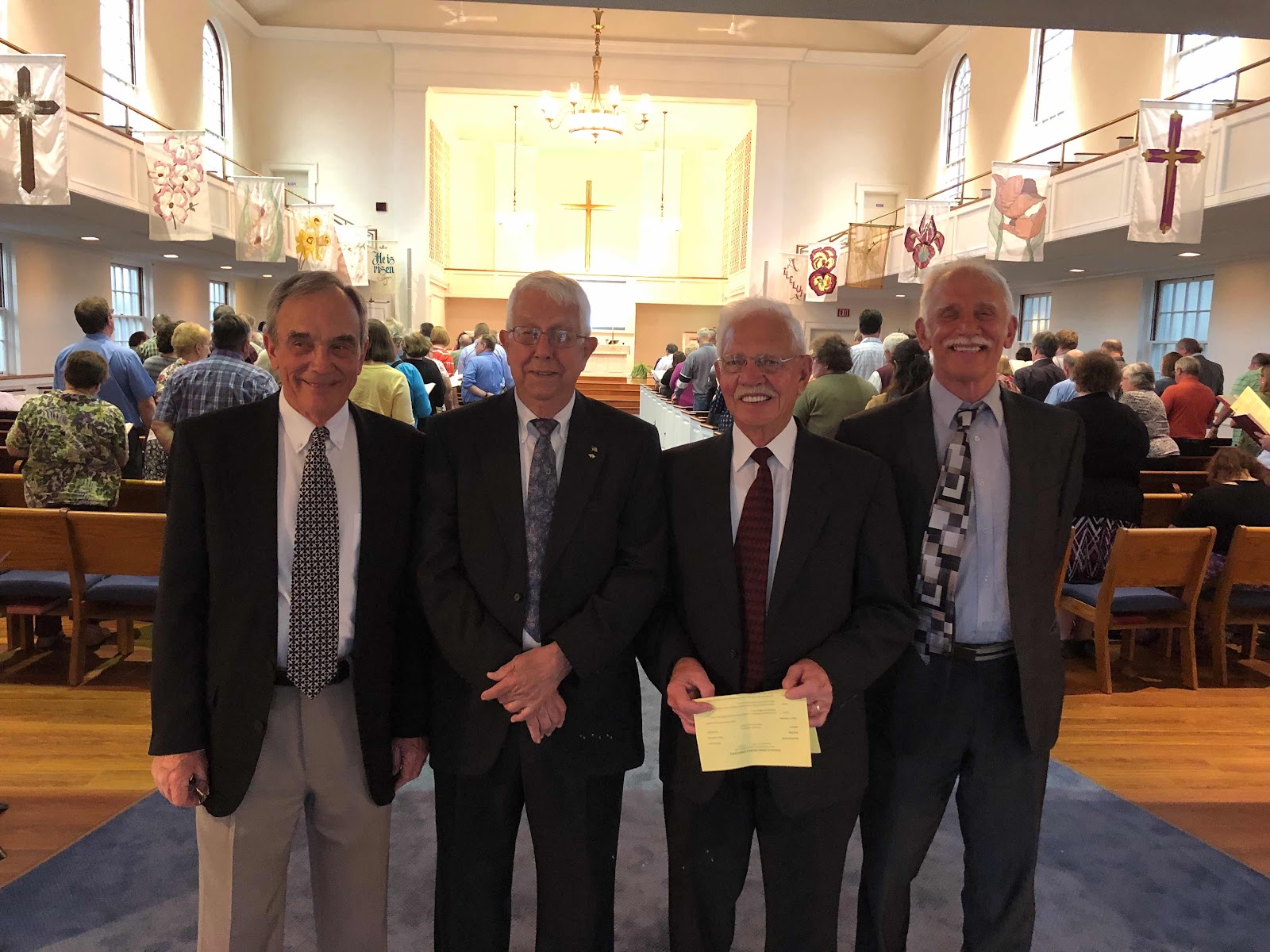
     The truth is that our ushers really do an amazing job. They know what they’re doing and I don’t take them for granted. If for some reason our entire ushering crew would take a Sunday off, it wouldn’t be that easy to replace them. Have you noticed that they have a method to how they distribute the offering plates. They have it down to a science.


     Here’s a picture of one of our ushering crews one Sunday. Don’t they look great! They look like they know what they’re doing! So, join me in giving a hand to our ushering team. Let’s show them our love. 

     We often take their work for granted and we take the offering time in the service for granted. But did you know that our church made the local news one Sunday because of our offering? 

     Sixty-two years ago this month, back in February of 1958, our church held the first Sunday worship service in this building. A fire had destroyed the previous church building three years earlier and on Sunday, February 9, 1958, the long, anticipated first worship service in the new building was held.

     The newspaper reported on this grand event and one of the highlights of that newspaper article was that there were so many people who attended that first worship service that we needed forty ushers to collect the offering that morning. Forty ushers!

     We usually have four ushers but can you imagine forty ushers?? That’s a pastor’s dream!!

     And so, our church was made famous by how many ushers we needed one Sunday morning to receive the offering. It impressed the local reporters, anyway.

     The reason I’m so focused on how we take the offering for granted is because it seems like Jesus doesn’t want us to take our Sunday morning offering for granted either.  He says in our Gospel reading for this morning that when you are about to offer your gift at the altar and you think about a broken relationship that you have with someone, to not offer your gift until you first go and seek reconciliation with that person.

     I’ve always struggled with this scripture reading and who doesn’t struggle with the Sermon on the Mount teachings in general. These are hard, hard teachings to follow. Jesus is setting the bar really high in these teachings.

     If you are familiar with the Sermon on the Mount, what Jesus is doing here is that he is taking those ancient commandments of Moses like don’t murder and do not steal, and he’s saying, that it’s not just about not killing somebody or taking something from somebody. It’s about out attitudes toward others. It’s about doing all we can to seek reconciliation with the other person. That’s the hard part about living out our faith. It’s in our attitudes toward others and not just our actions.

     You have heard people say, “Now, preacher, don’t go meddl’n or stepp’n on my toes in the sermon this morn’n. Don’t make me feel uncomfortable.” In the Sermon on the Mount, Jesus is meddl’n. He’s stepp’n on our toes. And he is making us feel uncomfortable. He is raising the standard on what it means to live out our faith. It’s about our actions and our attitudes.

     And we hear this all the time. One of the reasons why people don’t go to church is because they see how some Christians behave and treat others outside of Sunday morning.

     A pastor was telling me about a church member who was speaking negatively about another church member and often times it was in front of people during church meetings. I asked him how he handled this and he said that he had gone to her and told her that what she was saying was inappropriate, but she kept on doing it.

     So he prayed some more about it and he decided to approach her again, but this time with a slightly different theological twist. Instead of just telling her to stop doing it, this time he said, “Alice, as the pastor of this church, I will not permit you to speak negatively about another brother or sister in Christ.”

     By referring to the other person as a brother or sister in Christ, this church member was able to start thinking about her attitudes about this person through the eyes of faith and not just based on her perceptions of this person. 

     In the Sermon on the Mount, Jesus is calling for us to not just obey the ancient commandments of Moses but to also obey through the eyes of faith which leads to our attitudes toward other people.

     Following Jesus involves religious practices like putting an offering in an offering plate, but it also involves how we live out our faith in our relationships with others. 

     And so the best offering ever really wasn’t that Sunday morning, sixty-two years ago when forty ushers collected the morning offering. The best offering ever is when we offer our gifts, not to earn God’s love, not to just go through the motions of worship, and not without any thought of how we treat other people, but to always offer our gifts in the spirit of Christ.

     Maybe this is why the Apostle Paul says in II Corinthians that God loves a cheerful giver. Cheerful giving is when we offer our gifts through the eyes of faith and in the spirit of Christ. Cheerful giving is when we see our whole lives as an offering to God. Our offering isn’t just about a bank transaction. It’s about a spiritual transaction involving our attitudes and our hearts.

     Jesus’ Sermon on the Mount teachings are about inviting us to offer not just our money, not just our time, and not just our resources, but it’s about offering our lives and all of who we are to Christ. The offering time in worship is just a small symbol of that larger perspective. The offering time of worship is always an invitation for us to offer ourselves and not just our gifts to Christ.

     In one of the churches I pastored, a church member stopped by my office at the church during my first week there. He had called to say that he would be stopping by at some point.

     I’ll never forget this. He came into my office, introduced himself, and said “I just stopped by today to offer a prayer for you as you begin as our new pastor.” 

     And there in my office, he put his hand on my shoulder and offered this beautiful, beautiful, and encouraging prayer on my behalf. After he said, “Amen,” he welcomed me again to the church and before I knew it, he was out the door.

     I would soon discover what an incredible person of faith he was. He just did simple things like that, very unassuming, where he offered himself and always blessed others with his presence. He was a living offering for God.

     A favorite hymn of mine is “When I Survey the Wondrous Cross.” And I love the verse in that hymn that beautifully says,

     “Were the whole realm of nature mine, that were an offering far too small; Love so amazing, so divine, Demands my soul, my life, my all.”

     There’s a story about this hymn that involves one of the most prominent Christian leaders of the first half of the 20th century, William Temple who was the Anglican Bishop in England during World War II. His whole life was an offering to God as he worked to provide relief for Jewish refugees from Naziism.

     He once led a revival at one of the churches in England and he led the people in singing the hymn, “When I Survey the Wondrous Cross.” 

     There are four verses of that hymn and he led the congregation in singing the first three verses. And when it became time to sing the last verse, he momentarily stopped the music and he said to the people, “Now, if you mean this next verse with all your heart, I want you to sing them as loud as you can. If you don’t mean them at all, keep silent. If you mean them even a little but want to mean them more, sing them very softly.”

     When the organ started to play the fourth and final verse of that hymn, just imagine two thousand voices in that massive cathedral whispering in humility and reverence…

     “Were the whole realm of nature mine, that were an offering far too small; Love so amazing, so divine, Demands my soul, my life, my all.”

     It is said that of those who attended that service, that holy experience was never forgotten. Whenever we offer our gifts to God in humility, in faith, and in the spirit of Jesus, those are always the most special moments. 

     Our ushers are unsung heroes who by simply passing the plates pew by pew are giving us the opportunity to offer not just our gifts, but our very lives once again to Christ. And they remind us that we offer our gifts in response to “love so amazing, so divine, demands my soul, my life, and my all.”

     That is always the best offering we can ever give.


The Best Offering Ever
Sermon Discussion Questions
Matthew 5:21-37
February 16, 2020

Pastor Robert shared that sixty-two years ago on February 9, 1958, our church held its first worship service in our current building. The previous building was destroyed by a fire three years earlier. A local newspaper article covering that special Sunday service noted that there were so many people in attendance that we needed to have forty ushers to collect the offering! Most churches only need to have 2 to 4 ushers each Sunday!
What do you think about during the offering time of the service? If you are an usher, what does this role mean to you?
Jesus highlights the importance of our offerings in our Gospel reading today from the Sermon on the Mount. He tells us that when we are going to offer our gifts to God and we realize that we have a broken relationship with someone to first go to that person and seek reconciliation and then come back and offer our gift.
Why do you think that Jesus connects our offerings to God with the importance of being reconciled to others?
In his teachings from the Sermon on the Mount, Jesus is emphasizing our attitudes as well as our behaviors. Jesus is wanting us to have the eyes of faith in all that we do which means seeing others as children of God. The Apostle Paul reminds us to be “cheerful givers.” Pastor Robert defines a cheerful giver as “giving our gifts through the eyes of faith and in the spirit of Christ.”
What does it mean for you to have the eyes of faith in the spirit of Christ?
The lyrics of our church hymns often remind us to offer our gifts through the eyes of faith and in the spirit of Christ. For example, the last verse of the hymn, “When I Survey the Wondrous Cross” says, “Were the whole realm of nature mine, that were an offering far too small; Love so amazing, so divine, Demands my soul, my life, my all.”
What does this verse from the hymn mean to you?

Monday, February 10, 2020

Sunday Pastoral Prayer (Feb. 9) Athens First UMC


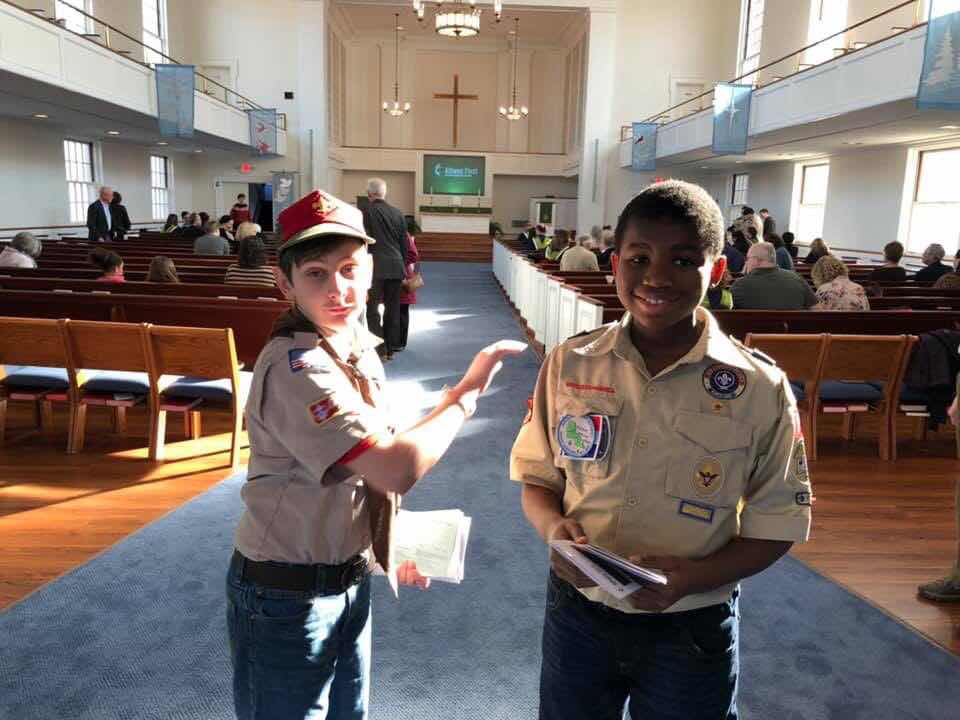
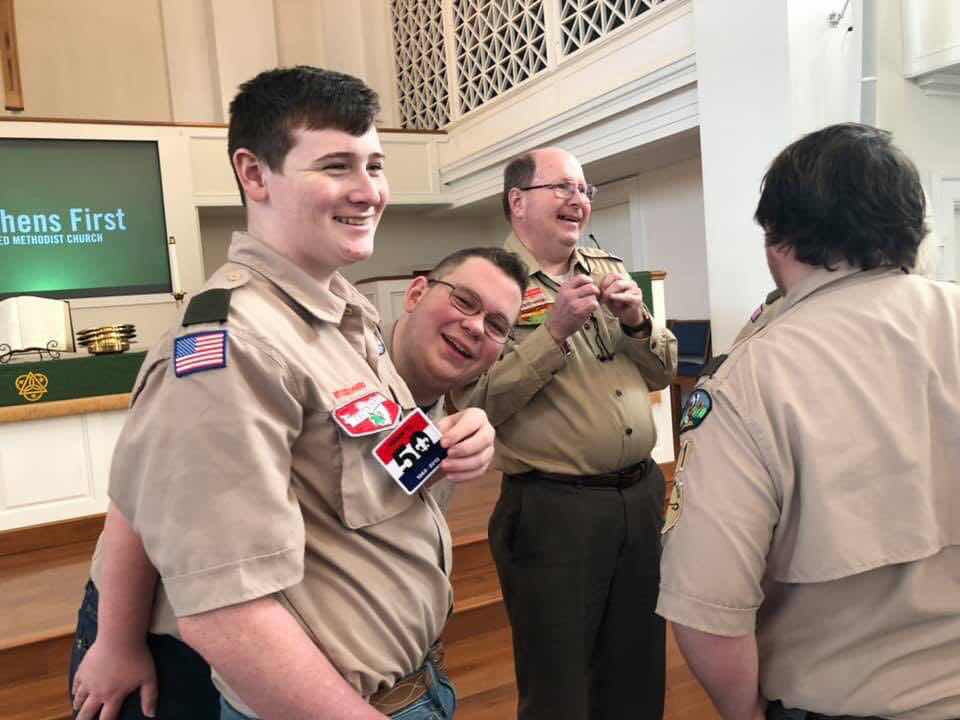
[We enjoyed hosting scout troupe #71 and their families for Scout Sunday. They assisted in leading parts of the service. This was also the 100th anniversary of the United Methodist Church’s affiliation with scouts. We appreciate all they do in our church and community! For more scout worship photos, see below and for the  sermon, click here.]


O God, this is a prayer for someone who is going through a time of darkness in their life, someone who is growing tired of these grey and dreary winter days, someone who is struggling with an addiction, someone who is facing a health problem, someone whose doubt makes it difficult to even say a prayer, someone who is fed up with our politicians, someone who is at odds with the teachings of their own denomination, someone who doesn’t even want to get out of bed in the morning because of all of the negative news in our world.


This is a prayer for someone, someone like us, someone like me.


In this dark time of year, we clutch onto Isaiah’s promise that your light will break forth like the dawn and your healing shall spring up quickly. We cling to Jesus’ words that we are the light of the world. O God, help us to be the light we want to see in our world.


Help us to be your light in the way that we care for the needs of others. Help us to be your light in how we live out our faith. Help us to be your light in sharing with others how you have made a difference in our lives. Help our scouts be your light in the way that they serve you and their country. Help us to be the light we want to see in our world. Just as the darkness gathers around a glowing candle, we gather around you, for you are the light of the world.


O God, you say that as we allow our light to shine in the way we care for others that your light shall rise in the darkness. May your church be a candlestick burning brightly through all that we do and say. It wasn’t that long ago that we raised our candles in this darkened sanctuary on Christmas Eve. It was a beautiful display of what a difference we can make if we all lift our lights together.


And so, we turn to you, O God to once again receive your light so that we might be your light that shines brightly in any place where darkness is bringing despair, hopelessness, pain, or brokenness. May each one of us contribute to the repair of the world by shining your light. We pray this in the name of the light of the world, Jesus who taught us to pray, “Our Father, who art in heaven…”


Sunday, February 9, 2020

Sermon (Feb. 9) by Rev. Robert McDowell


    This is that time of year when many of us are so ready for spring to come. Nothing against the month of February, but I can’t think of a more depressing weather month on the church calendar. 

     There was a day last February that for me won the award for the yuckiest possible weather day you can possibly have. It was on February 11th and I posted a picture of the weather that day on Facebook. Here’s the photo…


     It was when I was backing out of my drive way. I put this caption under the picture which stated: “I am nominating this day for the worst weather day of the year award. 

     The sky was as gray as it could possibly be. During the couple of days leading up to that day, we had almost every single weather alert known to humanity. One day, there was a snow alert. Another day there was a fog alert. Then there was a freezing rain alert. The shorter days, the gray skies, and the brutal winter weather are enough to make even the most positive thinking person want to crawl back into bed. 

     The only redeeming quality of this gray month of the year is that when that first 65 degree and sunny spring day finally does arrive, there is this unbelievable euphoric happiness that emerges. Everyone heads to the lawn and garden center. Neighbors begins to speak to each other for the first time since December. The world is made new again. What a difference light makes in our world.

     So much of the Bible describes a world that is filled with gray February type days. Take for example our Old Testament reading. The people of Israel at the time of this writing were living in exile. Torn from their homes and their familiar way of life, they were living during a time of great darkness. 

     They had lost hope even though they were still God’s people. They wondered if they would ever be able to return to their homeland. At least we have a calendar that tells us that spring is coming. That at least reminds us that better days are ahead. 

     The Israelites were in such despair that their gloomy situation led them to take out their frustrations on each other. They took on kind of a survival mode where their focus turned inward rather than outward. They became so absorbed with their plight, that they had forgotten to be who God had called them to be, a living witness of God’s love in a dark and hurting world even if that world is filled with gray and dreary skies.

     This is what happens to a people who lose hope. We can become so absorbed with all of the bad news in the world, that we either refuse to watch the evening news, kind of like crawling back into bed, or we can become cynical and negative in our attitudes with the people around us including with the people who are closest to us. And it can become this vicious cycle of negativity.

     This is why God has an important word of hope to speak to the people through the Prophet Isaiah. In our scripture reading, Isaiah is reminding the people to put their focus back on serving God and others and to spend less time wallowing in all that’s wrong with the world. Be the light that you want to see in the world.

     Maybe that’s why during this gray month of February, verse 10 really jumps out at me. Isaiah tells the people who are living in darkness that their “light shall rise in the darkness and their gloom will be like the noonday.”

     Like someone who encourages me during this time of year by saying, “I know it’s still February and football is officially over, but just one month from now, we will get to spring forward and we’ll have an extra hour of daylight. Hang in there! The light is going to shine!”

     Or in other words, Isaiah is telling the people of Israel to “be the light they want to see.” What does it mean to be the light you want to see? It means caring for the needs of others. It means blessing others through serving. It means having our outward religious expressions like attending worship and reading the Bible match how we treat others and care for the needs of people in need.

     But in the meantime, Isaiah reminds God’s people of what they can do to have a little sunshine even during their very dark time of exile. He tells them to serve others and to seek justice. He also tells them to not just go through the motions of their religious activities but to instead be humble and to open their hearts to God. “Be the light you want to see.” 

     Isaiah couldn’t change the fact that they were living in exile and away from their homes, but he was able to remind them to not give up on being who God had called them to be, a people who God formed to be his people and to be a blessing to others, a people who were called to shine God’s light no matter how dark the days may appear.

     Several centuries later, Jesus said something very similar to a people who were also living during a dark time. They too were wondering when God would deliver them from Roman occupation. They too were wondering when God might send them a King who would reestablish them as God’s people.

     And so, in this famous Sermon on the Mount, Jesus tells a crowd of discouraged people these words of great hope, “You are the light of the world. No one after lighting a lamp puts it under the bushel basket, but on the lamp stand, and it gives light to all in the house. In the same way, let your light shine before others, so that they may see your good works and give glory to your Father in heaven.”

     Jesus was echoing some of the same thoughts as Isaiah did centuries before him. As you wait for light, remember that you are the light, so shine your light before others. Be the light you want to see. 

     There is a Jewish phrase, Tikkun Olam which means the “repair of the world.” The idea behind this is that if we each allow the divine light from creation to shine in the world, the world can be made new again. 

     As people of faith, we are called to participate in Tikkun Olam, the repair of the world by shining God’s light wherever there is the darkness of injustice, inequality, and hopelessness. 

     We know all too well about the darkness. Alcohol and drug addictions can be like this great big gray cloud hovering over our communities. Two Ohio University professors, Dr. Dan Skinner and Dr. Berkeley Franz recently wrote a book about the Opioid crisis. Since the mid 1990s, almost 400,000 people have died from opioid overdoses, almost as many American soldiers who died during World War II. 

    But there are also many signs of hope as communities are beginning to come together to surround people who are facing these addictions. I think of the six AA meetings that happen on a weekly basis here in our church. Providing space for these meetings is a way that we are being the light that we want to see. 

     “The light shall rise in the darkness,” Isaiah tells the people.

     We also know all too well about the problem of food insecurity here in southeast, Ohio. We often feel powerless. The darkness is so great that we can easily lose hope. 


     But there are also signs of hope like when a Heisman award winner briefly mentions the extreme poverty rate that exists in his home area in southeast Ohio which then leads to people from all over the country donating over 500,000 thousand dollars to our Athens County Food Pantry. 


    Every Monday at noon here in our church, the light rises in the darkness as we serve an average of 110 hot meals every single week to the people of our community. 

     “You are the light of the world,” Jesus tells us.

     A couple of months ago, a clergy colleague, Rev. Ed Stallworth shared a powerful story of how one of his older church members continues to shine the light in her congregation.

     He says how he has been pastoring his current church for the past five years. And some of his members are now thinking that he will be moving soon and they are even starting to lament and dream of what the future holds. He told them that’s not how it works, and that there’s not a set time line in the United Methodist Church for how long a pastor stays, but his church has experienced short pastorates over the past several years so they have been a little concerned now that he reached the five year mark.  

     He went on to say that during a recent Sunday morning, a 94-year-old woman in his church kind of startled him by saying, “When you leave, I hope we get a woman pastor. And if my time comes, and you know I love you, I want HER to do my funeral.” He asked her why? Of course out of pastoral courtesy, he would want the new pastor to lead the service, but he was still curious as to why she would make such a statement. 

     She then explained that she, at one time, wanted to be a pastor herself but was told that she could never be one. She then told him how she has worked hard to change minds, encouraged support of women being pastors, and finished by saying, “When my funeral happens, I want to be in heaven watching, point to the preacher doing my funeral and say, ‘I helped make that happen.’”

     But she wasn’t finished. She then told him that she also hopes that the next pastor will be a gay woman pastor but at 94, she isn’t going to hold her breath and she will have to leave that work for him to do. 

     The woman’s friend who was sitting next to her in the pew as she was telling him all of this scoffed and shook her head in disgust.

    After sharing this story, this pastor concluded by saying, “I love my church.”

    I can relate to what this pastor is saying because I don’t know what my family would have done without the caring and loving support of our home pastor when my dad died several years ago. She was amazing! And I have been blessed to work with so many gifted and talented woman pastors in my years of ministry. 

     And as we approach this May’s General Conference being held in Minneapolis, Minnesota, my prayer is that our denomination will finally change our stance on LGBTQ issues so that people who are called by God and have the gifts and graces and qualifications to be a pastor will one day be ordained in the United Methodist Church. And I hope that day comes sooner rather than later.


     It was almost a year ago when the General Conference had a special meeting in St. Louis and failed to find a way forward. The skies seemed even grayer this time last year when that vote was taken. But that dark time for our denomination led me to become even more intentional in shining the light of God’s welcome and love for all people. Sometimes our light becomes even brighter the darker it gets.

     Isaiah has a word for us in this gray/slushy/freezing rain/raw time of year. “Your light shall rise in the darkness and your gloom will be like the noonday.” Jesus reminds us that we are the light of the world. Let your light shine.

     Let’s keep being the light we want to see. 


Be the Light You Want to See
Sermon Discussion Questions
Isaiah 58:1-9a & Matthew 5:13-20
February 9, 2020

During the time of our Old Testament reading from Isaiah, the people of Israel were living during a time of great darkness and despair. God’s people were still in exile and during this time of darkness, they became inwardly focused and had forgotten who God had called them to be.
Share a time when you were living in a time of darkness and despair. How did that experience shape your view of God?
The Prophet Isaiah spoke a word of hope in the midst of the people’s exile and darkness. He proclaims, “light shall rise in the darkness and their gloom will be like the noonday.”
Has anyone offered a word of hope to help you get through a difficult time in your life? What did they do or say that gave you the hope you needed? When have you offered hope for someone who was going through a time of darkness? What did you do or say?
In our Gospel reading, Jesus reminds us that we are the light of the world. Keep in mind that the people to which he was speaking were also living during a dark time under the rule of the Roman Empire. During Jesus’ day, the people were longing for a coming Messiah who would free Israel and set up God’s long awaited kingdom. Even though the people were living under oppression, it was like Jesus was telling them to not wait in being the light, but to be the light that they want to see.
In what ways is God calling you/the church to be the light that we want to see in the world? What helps you to be the light that you want to see?

Pastor Robert shared the story of a male clergy colleague who was told by one of his elderly parishioners, that she wanted a female pastor to do her funeral. Even though she loved her current pastor, this was her way of supporting women pastors who have often been unfairly treated simply because of their gender. Currently, the United Methodist Church is torn over the issue of equal rights for the LGBTQ community at it pertains to ordained ministry and marriage equality. The upcoming May UMC General Conference meeting will focus on these issues again.

In what ways can we be the light that we want to see in the world especially for people who often feel marginalized in our society?

Monday, February 3, 2020

Sunday Pastoral Prayer (Feb. 2) Athens First UMC


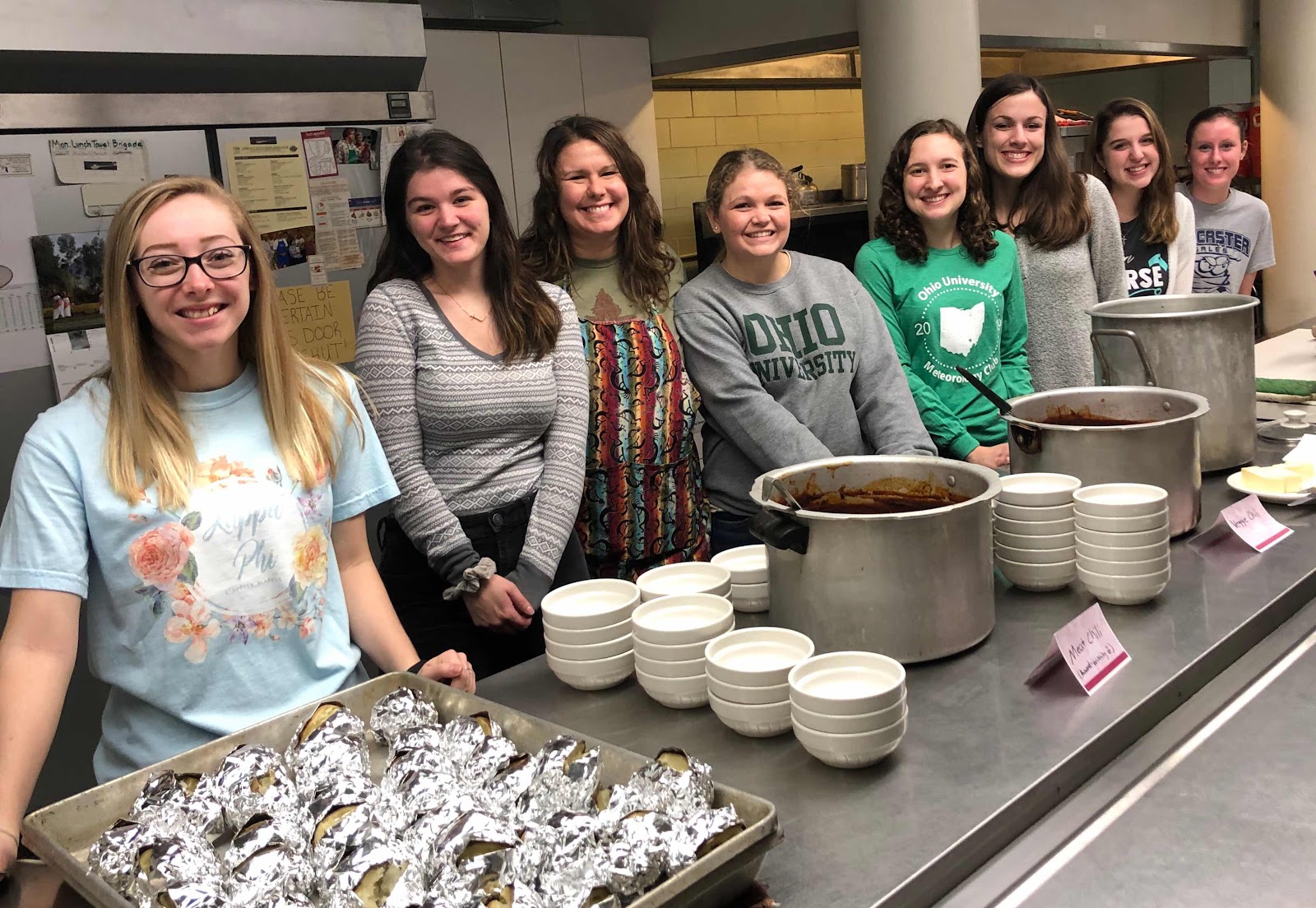
[It was appropriate that on the Sunday that our church was focusing on Jesus’ blessings from our beatitude scripture reading, we were also blessed by these Kappa Phi Students who served us a hot potato/chili lunch after our 10:30 worship service. They will be helping to lead worship on Feb. 16. We appreciate the many ways they bless our church! For the sermon, click here.]


Lord Jesus, forgive us for being so confused with what makes us the happiest. A new flavor of Doritos or a recognition of our own poverty. A new car that can park itself or an attitude of meekness. The new Mountain Dew Zero flavor or realizing that we are really just thirsty for you. The funeral of the Mr. Peanut Planters mascot or coming to terms with our own sense of grief and loss in life. 


Products like Pringles, Olay, and Cheetos and their creative marketing lead us to believe that they will make us happy and yet you tell us in your Sermon on the Mount commercial that we are most blessed when we recognize our deep need for you.


Thank you for pronouncing a blessing upon each one of us this morning. When our hearts are grieving, thank you for your blessing. When we suffer for standing up for what is right, thank you for your blessing. When we offer ourselves in humility in a power hungry world, thank you for your blessing.


It’s your blessing that enables us to keep going when we grow weary. It’s your blessing that reminds us that the meek shall inherit the earth. 


And thank you for calling us to extend your blessings to the people around us. To the next door neighbor who is grieving the loss of a loved one. To the child being bullied at school. To the college student struggling with anxiety. To the family with very limited income. May your church be a haven of your blessing and peace especially for those who feel like they have the least.


Lord Jesus, of all of the creative commercials we will watch later today on this Super Bowl Sunday, nothing can ever compare to what you are offering each and every one of us in this very moment. Your blessings.


Teach us now to pray the words you taught us to pray together…


“Our Father, who art in heaven…”

Sunday Pastoral Prayer (Feb. 2) Athens First UMC


Lord Jesus, forgive us for being so confused with what makes us the happiest. A new flavor of Doritos or a recognition of our own poverty. A new car that can park itself or an attitude of meekness. The new Mountain Dew Zero flavor or realizing that we are really just thirsty for you. The funeral of the Mr. Peanut Planters mascot or coming to terms with our own sense of grief and loss in life. 

Products like Pringles, Olay, and Cheetos and their creative marketing lead us to believe that they will make us happy and yet you tell us in your Sermon on the Mount commercial that we are most blessed when we recognize our deep need for you.

Thank you for pronouncing a blessing upon each one of us this morning. When our hearts are grieving, thank you for your blessing. When we suffer for standing up for what is right, thank you for your blessing. When we offer ourselves in humility in a power hungry world, thank you for your blessing.

It’s your blessing that enables us to keep going when we grow weary. It’s your blessing that reminds us that the meek shall inherit the earth. 

And thank you for calling us to extend your blessings to the people around us. To the next door neighbor who is grieving the loss of a loved one. To the child being bullied at school. To the college student struggling with anxiety. To the family with very limited income. May your church be a haven of your blessing and peace especially for those who feel like they have the least.

Lord Jesus, of all of the creative commercials we will watch later today on this Super Bowl Sunday, nothing can ever compare to what you are offering each and every one of us in this very moment. Your blessings.

Teach us now to pray the words you taught us to pray together…

“Our Father, who art in heaven…”

Sunday, February 2, 2020

Sermon (Feb. 2) by Rev. Robert McDowell


     There will be a football game tonight...The winning team will receive the Vince Lombardi trophy which is created by Tiffany's of New York. The Super Bowl was watched by an estimated 98 million people last year. It is a contest of superlatives: the fastest, the strongest, the most powerful, the most determined. Besides the game there will be enticing  commercials which are  usually unique and fun to watch.  The commercials are quite a display of all the things in the world that are said to bring us happiness:  cars, beverages, Doritos...


     It is ironic that the designated Gospel reading for today is from Matthew 5 and is commonly called the Beatitudes, which mean blessing or happiness. What does bring us happiness?


     The disciples and others had gathered around Jesus to hear his message.  In Jesus' day as in ours, the marks of success were usually one's position in society, one's wealth, one's family, one's achievements.


     Happy are those who have, and especially those who have the most! These are the folks who are considered blessed, who are in the spotlight.


     Jesus however looks at his listeners and speaks of them being favored by God and he doesn't mention any of the usual terms of success. His list goes in a different direction because it deals with the heart and one's relationship with God and with others.  Words jump out at us: poor, meek, thirsty, grieving, persecuted, merciful, peace seeking, pure.


     Jesus is describing those who are part of his kingdom, those who are trying to follow him. This is their reality. This is our reality. He shares that God is with us whether our lives are empty or full. Even in brokenness, there can be blessing!


     Let's look at each of these 8 sayings: what is it like to participate  in God's kingdom? What is in store for those who look to God for everything?


     A friend of mine shared an article about manor houses in England. (Think Downton Abby) One residence stood out among those featured. On the corridor walls were hung portraits of those who had been part of the estate. In this house, the portraits were of their servants. Through the years, generation to generation, the ones chosen to be honored were the ones who had served: the butlers, the maids, the gardeners.  The Beatitudes are the hall of fame for God's kingdom, portraits of those who serve God.


     As we look at the Beatitudes, are there ones that reflect your life?


-Honored  are the poor in spirit: There is good news for those who see the emptiness of their lives, and their need for grace. The people who know how frail they are and so they put their whole trust in God. They will not be disappointed.


-Honored are those who mourn: there is good news for those whose hearts are broken by their own loss and the tragedies of the world. In their vulnerability, they know their need for God and will in turn  receive  strength, and deeper empathy for others.


-Favored are the meek: there is good news for those who realize who they are in God's eyes, who are unassuming and have humility that gives them power.


     Henri Nouwen, an author and professor taught at Yale and Harvard. He left teaching and went to be a part of the Daybreak Community near Toronto, Canada. The Community is made up of folks with mental  and physical handicaps along with those folks who care for them.  Nouwen said that he experienced an identity crisis because people at Daybreak had not read his books, did not know his reputation or that he was famous. This forced him “to recognize his true identity.”  His accomplishments did not matter. What was important is that he could give and receive love as a child of God. 


-Honored are those who hunger for righteousness to prevail. There is good news for the one who yearns for suffering to end, and justice to come.


-Favored is the one who is merciful. There is good news for the one who sees what others see and feels what they feel, and responds with mercy. You will find others will show mercy to you.


-Honored are those who are pure in heart. There is good news for those who are earnestly seeking to know God and to know themselves, who do the right things for the right reasons.


-Honored are those who are the peacemakers. There is good news for those who restore relationships between people. They are reuniting God's family.


-Favored are those who are persecuted: there is good news for those who are treated badly for doing good. Their dreams will come true.


     For the 1964 World's Fair in New York, an artist, Sister Mary Corita produced a banner which was 40 feet long and featured the Beatitudes. Amid all the advances of technology at the Fair, (some of the first computers were on display) her banner proclaimed the joys of God's kingdom. This is her translation which was written on the banner:


     Happy are those who feel their spiritual need for theirs is the Kingdom of Heaven. Happy are the gentle for the whole world belongs to them, Happy are those who hunger and thirst for what is right for they will be satisfied. Happy are those who show mercy for mercy will be shown to them. Happy are those who know what sorrow means for they will be given courage and comfort. Happy are the single-hearted for they will  see God. Happy are those who make peace for they will be known as the sons of God. Happy are those who have suffered persecution for the causes of goodness for the Kingdom of Heaven is theirs.


     All of us have been invited to a party today, not necessarily a Super Bowl party, but a party with all who have responded to Jesus’ call to come and follow him. The Beatitudes show us who said yes to the invitation. I hope that we find ourselves in that company of famous and unknowns, of timid and brave hearts.


     Barbara Lemmel is a UM pastor  and she tells of driving her son Micah (who was 3) to day care. Micah was studying his reflection in the mirror on the sun visor. She played a game with him and asked, “Who is in the mirror? “Is it Daddy?  Uncle John ? An elephant? Is it Jesus? You know whenever you look in a mirror you see Jesus a little bit. Jesus is always in you a little bit.”   


     Micah was silent as he pondered that. And then he said,“I need Jesus to be in me a lot.” 


     I would join Micah in his evaluation of our human condition. Micah also captured the essence of each of the Beatitudes: when we have compassion, when we are humble, when we are merciful, when we are peacemaking, when we are grieving, when we are ridiculed, when we are desperate to know God in every facet of our lives - then we are reflections of Christ! Living the Beatitudes helps us see our true identity.


    Yes, there is a football game tonight. If you do watch the Super Bowl, I hope you have some of your favorite snacks and that you enjoy the game. When the cheering is over, the pizza is gone, and all the awards are given, remember to count your blessings. These are the blessings that lead to the greatest honors and the deepest joys in this life, a life that is centered on being part of God’s kingdom here on earth.


Count Your “Blessings”
Sermon Discussion Questions
Micah 6:1-8 & Matthew 5:1-12
February 2, 2020

Today’s Gospel reading is commonly known as “The Beatitudes.” This is where Jesus begins each beatitude with the words, “Blessed are...” Some bible translations use the word, “happy” instead.

What makes you happy? How do you define happiness?

Jesus’ defines “happiness” or “blessedness” in a way that might be a little counter to our ideas of happiness. He says we are blessed when we are poor in spirit, when we mourn, when we are meek, when we hunger and thirst for righteousness, when we are merciful, when we are pure in heart, and when we are persecuted.

What thoughts, questions, or ideas come to your mind when you think of this list and Jesus’ understanding of happiness? 

Which of these descriptions of being blessed stand out the most for you? Which ones do you find the most challenging to maintain?

Pastor Robert shared in his sermon about a parent of a preschooler who was teaching her son that whenever he looks in the mirror, hopefully he won’t just see his reflection but also the reflection of Jesus. His comment to his mother was, “I need Jesus to be in me a lot!”

Share some ways that we can help the people around us to see Jesus’ reflection in us a lot. What helps you to be blessed and happy in the ways that Jesus describes in the list of beatitudes?