A United Methodist Pastor's Theological Reflections

"But thanks be to God, who gives us the victory (nikos) through our Lord Jesus Christ." - I Corinthians 15:57


Sunday, August 16, 2020

Online Worship (August 16) Athens First UMC


Welcome to our (August 16) online worship!
Athens First UMC!
2 S. College St., Athens, OH 45701


Wednesday, August 12, 2020

Holy Hump Day (August 12) with Pastor Robert


Today’s Focus:
Bible Translation Challenges & 
Tour of Archives Room


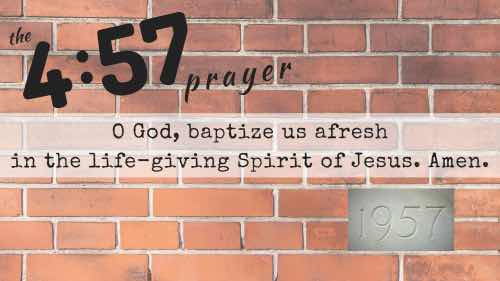
[The unison prayer above is found in the April, 1957 cornerstone ceremony bulletin that is located in our church’s 3rd floor archives room. Notice the middle line that says, “Oh, baptize her (the church) in the life-giving spirit of Jesus!” This is the prayer that we use for our ‘4/57’ daily prayer to commemorate that important date in our church’s history.]


Monday, August 10, 2020

Sermon (August 9) Rev. Robert McDowell


     Have you ever listened to a sermon that was way too long? Wait, don’t answer that.

     Actually, this is the question that first came to mind when I began reflecting on our psalm for this week, Psalm 105. It’s not just that this Psalm is one of the longer psalms we have. There are forty-five verses. We just read a small portion of those verses which I’ll get to later.

     It’s not only long with the number of verses, but it goes over things that many of us already know or have heard at some point in our lives. It tells story after story of Israel’s early history. You have to have a lot of patience to work through this whole Psalm since you already know about these stories.

     Psalm 105 would be like if I started my sermon by saying, “Let me begin by telling you about the day I was born.” And then I would tell the story of when our family went to Niagara Falls when I was two years old and I cried the entire trip. True story by the way. And I don’t know why I wouldn’t have liked going to Niagara Falls, but I didn’t. 

     And from there, I tell you a story about my kindergarten graduation. My favorite childhood birthday party. And I would continue to tell you a string of these stories of my life. 

     Penny likes to remind me of the watermelon approach to public speaking. When you give a talk you don’t have to tell people about the whole watermelon. Maybe focus on just one seed so your message doesn’t skip and jump from one thing to the other.

     But the Psalmist of Psalm 105 wants to tell us about a lot of stories in just one psalm. We get the whole watermelon with this psalmist. In this psalm, he recounts earlier biblical stories about Abraham, the person who God called to be the father of a great nation. Then he moves to the next story about Isaac and then he references Jacob. 

     Which then leads to a story about how God formed Israel and that leads to a story about Joseph in the land of Egypt, and from there, we hear about how the Israelites became slaves in Egypt which leads to a story about Moses confronting Pharoah who finally let God’s people go. This leads to a story of how God guided Israel through the wilderness to get to the Promised Land.

     Every time the psalmist seems like he’s going to say, “And in conclusion” or “To make a long story short,” we get another story and another story.

     Normally, I would say that if that was a sermon, it would be considered “below average” because it doesn’t follow the watermelon seed approach. Too many stories.

     But actually, that’s the whole point this Psalmist is making. All of these stories of how God has helped his people to overcome all of these challenges and adversities over all those years remind us of how faithful God really is. The Psalmist even gives us a little warning that this is going to be a long prayer at the very beginning of the psalm when he says, “Sing to him, sing praises to him; tell of all his wonderful works.”

     “Tell of all his wonderful works.” Really? All his wonderful works? We’ll never make it to the closing hymn and the benediction if we take that literally.

     But I love that line because the psalmist is reminding us that God has done many wonderful works. And he wants us to tell others about those wonderful works.

     And this is probably the most important reason our discipleship strategy here at Athens First is for each person to have a loving faith, a learning faith, and a living faith. If you think about it, all of these areas are about helping us to do what this psalmist is saying, “to tell of all his wonderful works.”

     Our loving faith ministries include small groups that are designed for each person to share in the group the wonderful things that God is doing in their lives. I also thing about our Thirst covered dish gatherings where different people share how God has been present in their lives. 

     Our learning faith ministries help us to learn about the wonderful things that God has done throughout the scriptures. So we have bible studies, confirmation classes, and other learning groups where we can study together.

     And our living faith ministries encourage us to share with others through word and deed about the wonderful things that God has done and is doing.

     The good news of our faith is that we don’t have a shortage of the wonderful things that God has done and is doing. Those stories are plentiful.

     So this is what the Psalmist is doing. He is reminding us of all the things that God has done in the past. And we get this brief summary of stories of the biblical patriarchs. But it’s more than a history lesson where we need to take notes or we might fail the exam.

     This psalmist wants us to not just remember the details of these past wonderful deeds that God has done. He wants us to see how God has been faithful to his covenant. This is probably one of the reasons why this psalm is read on the first day of the Jewish holiday of Passover each year. It’s a great Psalm to reflect on the past history of our faith.

     We do something similar every time we celebrate the Sacrament of Holy Communion which is the Christian adaptation of the Passover meal. We have that long responsive prayer called “The Great Thanksgiving.” 

     In that one prayer, we recite God’s mighty acts of salvation beginning with the creation story, then we hear about how God delivered the Israelites from slavery and led them into the promised land, how God formed a covenant with them, which then leads to the telling of the life, death, and resurrection of Jesus. This “Great Thanksgiving” prayer is celebrating God’s wonderful works like this Psalmist is doing.

     I love the name for our communion prayer, “The Great Thanksgiving.” What a great name for a prayer. And we share in this prayer every time we gather to receive the Sacrament. 

     Stories are what help form us into a community of faith. I think this is why the Psalmist is calling on us to tell our stories of how God has been faithful. 

     On one hand, we all share the same story of faith which comes to us from the scriptures. We all can share how God created us and formed us into his image. We can all share how God rescued the people of Israel and led them to the Promised Land. We can all share the highs and the lows of how God’s people sought to live out their covenant with God. And we can share the story of how God sent Jesus into the world to be our Lord and Savior. These are all of our shared stories of faith. What a great, great story of faith we have. The Bible is our family album, too!

     And then we also have our unique stories of faith that are born out of these shared biblical stories. God’s wonderful works didn’t end with these biblical stories. God continues to do wonderful works through each of us. We call these “thin place” moments, or as our psalmist likes to call them, “wonderful works” moments.

     Where do you see God at work in your life offering guidance, direction, comfort, assurance, encouragement, hope, new life? These are the wonderful works that continue to happen in our every day lives.

     I’d like to share one of these “wonderful works” moments that happened to me this past March. We had just made the decision to not hold our worship services at the church because of the coronavirus pandemic. And if you remember, these decisions needed to be made on a day to day basis because of new information we were receiving from the State of Ohio. Even before the “stay at home” order issued by the governors of Ohio, we decided to discontinue our Growing Tree preschool and our Monday Lunch ministry for safety reasons.  

     Even though our worship services were now online and groups weren’t using our church building, our staff was continuing to work in the building. At that time, people could still come in and out of the building for church business. 

     I remember struggling with the decision to just lock down the building 24/7. It wasn’t an easy decision because on one hand, we needed to care for the basic administrative needs of the church, but I was also worried about the safety of our staff with people still coming in and out of the building.

     You know how when you are facing a difficult decision, you just pray to God to show you a sign? That was basically my prayer for those couple of days. 

     As that decision was weighing on me of what was best to do, I needed to go to Kroger one day and purchase something we needed for the church. I remember thinking how I just wanted to get in and out of the store because of how contagious the virus is.

     After I left Kroger, I decided to get on Highway 50 to come back to the church instead of going through town. Remember when I said that I prayed that God would given me a sign? When I was driving back to the church, I saw the flashing state highway sign that read, “STAY HOME. WE’RE IN THIS TOGETHER.”


     Friends, sometimes God’s signs to us are that obvious! When I got back to the church, I told the staff that beginning the next day, we were shutting down the church. I encouraged the staff to find ways to do as much of their work as possible in their own homes.

     When I went home that day, I remember feeling so relieved! It ended up being the right decision. 

     This is just one example among many of God’s wonderful works that happen all around us in big and small ways. Psalm 105 encourages us to share these “thin place” moments with each other and tell of God’s wonderful works.

     When you have a bunch of people telling each other and the people we see of how God is at work in our lives, in our community, and in our world, it always leads us to praise God even more. That’s why this psalm is known as a praise psalm. 

     No wonder this Psalmist prayer is so long. He wants us to remember all of these stories of how God has been faithful. He’s describing the whole watermelon and not just one seed.

     Story after story of how God is at work in the world. So many stories that lead us to say again and again and again, “Praise the Lord!”
     
     
     A Psummer of Psalms: Psalm 105
Sermon Discussion Questions
Psalm 105:1-6, 16-22, 45b & Genesis 37:1-4, 12-28
August 9, 2020

Psalm 105 is one of the longer psalms (45 verses!) The reason that it is long is because the psalmist is reviewing the history of Israel. One of the reasons biblical writers do this is to remind us of God’s faithfulness over the years. It also reminds us that the Bible is our family album even though we did not live during that time period.

Do you think it’s important to pass along family stories to other family members? Share an example of a helpful story about your family that has been passed down to you and other family members. How do these kinds of stories help us to be more connected as a family?

The psalmist from Psalm 105 includes stories (Genesis through Exodus) about Abraham, Jacob, Joseph, and Moses. These are some of the most important patriarchs of the biblical faith.

What stories do you know about the patriarchs mentioned in Psalm 105? Who shared these stories with you? In what ways can we share these stories with others?

The psalmist encourages us to sing praises to the Lord and to “tell of all his wonderful works.” Our church refers to “wonderful works” as “thin place moments” where we experience God’s presence in our everyday lives.

Share a “thin place moment” that you have experienced where God has been present in your life or in how God has guided you through a situation you were facing. In what ways do you offer praise to God in response to God’s “wonderful works” in your life?

Sunday, August 9, 2020

Online Sunday Worship (August 9) Athens First UMC


Welcome to our (August 9) online worship @ Athens First UMC!
2 S. College St., Athens, OH 45701


Wednesday, August 5, 2020

Monday, August 3, 2020

Sermon (August 2) by Rev. Robert McDowell


     If you have ever felt that you have been treated unfairly and you need to vent, wow, do I have the psalm for you! 

     Our Psalm for today is Psalm 17. Of the five categories of psalms, this psalm fits into the “psalms of lament” category because the psalmist is lamenting at being treated unjustly. 

     Now, this topic of being treated unjustly can be a little tricky because it’s prone to subjectivity. We can easily get bent out of shape over what we consider to be someone’s unjust treatment toward us when in reality, it might just be that we have misunderstood the situation or that we are too quick to judge someone.

     For example, and I can’t believe I tell you these stories of things that I have done of which I am embarrassed, but here it goes.

     The following round-about chart helps us to see how these things are supposed to work with a little humor thrown in. Let’s start with car “A” at the top of the round-about. This car is yielding properly. If it enters now, it will cause an accident. Don’t be car “A.”

     Next is car “B” located at the bottom of the round-about. This car is entering properly. There is no one to yield to. 

     Next is car “C,” the red car located on the left of the round-about. This car is yielding to nobody for no reason because it things is has to yield if ANY car is in the circle ANYWHERE. Don’t be car “C.”

     And finally, there is car “D” which is also on the left of the round-about. This car hates car “C.”


     I know that roundabouts are not everyone’s favorite way of dealing with intersections in Athens. I actually don’t mind them because I think that it keeps traffic flowing. If you have questions about how to use a roundabout, I think Penny has the best answer. All you need to remember is once you’re in the circle, you’re in. When you’re in, you’re in. You have the right-a-way. And you can drive around that circle as long as you like. When you’re in, you’re in.

     But once in a while, and I’m sure this has happened to you, you are in the roundabout driving behind a car who doesn’t understand how this works, and they end up slowing down at each entry point to let people into the roundabout. This is not how roundabouts work. Once you’re in, you’re in. Usually when someone ahead of me stops to let people in, I do not lay on my horn, but one day I did.

     I got in the roundabout on the Richland bridge one day, and the car ahead of me in the circle all of the sudden completely stopped to let a car enter into the circle. I thought to myself, “Buddy! Really?” And I don’t know why this annoyed me, but I decided to lay on my horn. I also mouthed the words, “Keep it moving!” Don’t worry, I didn’t say any bad words.

     But in that moment, I was upset. This guy in front of me was slowing me down. I had places to go. People to see! And c’mon, learn how to drive through a roundabout. These out-of-towners! I’m tell’n ya! I was venting and employing some of this Psalm 17 language. “Rise up, O Lord, and confront them!”

     As I was getting worked up about this and feeling that I had been treated unjustly, that’s when I realized that the car in front of me had stopped in that roundabout for a very good reason. It was because he was letting a funeral procession enter into the circle. When I saw that, I realized that I was being a “you know what” for laying on my horn. I felt absolutely terrible! I waved my hand at the person in front of me to indicate that I was sorry.

     Now as a pastor, I have been the passenger of that funeral procession lead car many times and I have often complained how cars can be disrespectful when it comes to funeral processions, and here I was being “that guy.” In that situation, Psalm 17 did not fit the situation. I was not being treated unfairly. I was just plain wrong.

     So, let’s be clear as we look at using Psalm 17 in our own prayer lives. This psalm is assuming that we aren’t being “that guy.” It’s assuming that we have taken the time to reflect on if we have truly been treated unfairly or if we have maybe misunderstood the situation.

     This is why the Psalmist begins by saying, “let your eyes see the right” and “try my heart” to see if there are any transgressions in him. So, there is humility in the way this psalmist begins the prayer. “I’m really upset with what this person has done to me, but Lord, let me know if there is something not right within my own heart.” That’s my wording, but this sounds like the intent of how the psalmist begins Psalm 17.

    Now, that’s a sign of spiritual maturity when you can start complaining about how you are being treated unfairly, and at the same time admit that maybe you are not seeing the big picture. Maybe I’m part of the problem. So, it is with this spirit of humility that the Psalmist continues to vent to God about what has been done against him. 

     Psalm 17, along with the many other psalms of lament that we find in the Book of Psalms, gives you and me the permission to vent our frustrations to God. Long before modern day psychology, these psalms help us to process our frustrations, our anger, our rage, and our disappointments and let God know how we truly feel.

     We all can probably name several unhealthy ways for us to vent these feelings. We can take it out on those closest to us. We can use passive-aggressive behavior. We can let these feelings bottle up but that only lasts so long. They will come out in some way. This psalmist is giving us permission to let God know how we have been treated unjustly. Sharing our feelings with God in prayer is a very healthy way for us to process these feelings.

     This is the only time during the three-year lectionary cycle of Sunday scripture readings that Psalm 17 appears. It’s not a long Psalm, but the lectionary only offers us a portion of this Psalm to read in worship. Notice that it leaves out verses 13 and 14. 

     These are verses in which the Psalmist tells the Lord to rise up and put these slanderers in their place. It tells the Lord to punish their accuser’s children, and their children as well. This is not the Psalm that any of us probably learned when we were children in Sunday School. 

     But think of it this way. Is it better to vent your feelings of vengeance in a prayer, or to take matters in our own hands? The answer is to vent your feelings through prayer.

     Unfortunately, many of us, myself included have been taught to keep our feelings inside, especially our feelings of anguish and disappointment. But that’s just not healthy and it’s unrealistic. I had a theology professor in seminary tell our class that God is big enough to take on any question or frustration that we might be dealing with in our lives. God wants us to be our authentic selves and how we are feeling in any given moment.

     That was such a freeing thing for me to hear my seminary professor make this point. God is big enough to take on any question or frustration that we might be dealing with in our lives. The Psalmist of Psalm 17 reminds us that it’s OK. It’s not like he was holding back. But again, as long as we vent to God in a spirit of humility, and knowing that our hearts need to be examined as well, this Psalm can help us to become even stronger in our faith and in our trust in God.

     This Psalm is paired with our Old Testament reading from the Book of Genesis. It’s the story of Jacob who wrestles all night with a messenger sent from God. Jacob has been on the run from his brother, Esau who has been his adversary since childhood.

     This night of wrestling serves as a turning point in Jacob’s life. Jacob ends up winning the wrestling match and in the morning, the Lord blesses Jacob with a new name. No longer will he be known as Jacob. His new name will be Israel. In a similar way, like Jacob, this psalmist in Psalm 17 invites God to test his heart by night, with the hope that when morning comes, he will be satisfied and behold God’s likeness. 

     If you have ever had a restless night where you are struggling with unresolved issues, a complicated relationship, and the emotions of fear and uncertainty, this Psalm invites us to let all of that go and know that God is our refuge. So many times, we forget that it’s OK to complain to God. It’s OK to wrestle with God. It’s OK to let God know how we truly feel about a situation we may be facing.

     There is something very freeing about offering our laments to God. The Psalmist knows that God will answer him and he will receive God’s steadfast love. 

      Over the past several years, our denomination has been struggling to find a way forward regarding same sex marriage and the ordination of gay and lesbian pastors. The tension over this issue has been very divisive among clergy and laity. 

      During the week leading up to the special General Conference in February of 2019, I was really finding it difficult to maintain a collegial spirit with my clergy friends who were very open about their traditional stance on this issue. I would read their facebook posts, their tweets on Twitter and their online sermons about this issue, and I remember becoming very angry with them in how they were in my view, misrepresenting the Bible’s teachings on this important issue. 

     I was being labeled as being unbiblical in my views. And this made me really angry, because, quite frankly, I have spent my whole life reading, studying, and loving the bible. So it wasn’t an issue of being unbiblical. It was that we were interpreting the bible differently. So much can be said about that, but I think that was the issue.

     So the more and more I was hearing that I was being unbiblical, the more and more I was leaning on these psalms of lament, like Psalm 17 just to get out my frustration. People who know me well could tell that I was becoming irritable and impatient. And they could tell that I wasn’t being myself. But I want you to know that like the Psalmist in our Psalm for today prayed, I had confidence that God would guide me through that dark period. 

     “I call upon you, for you will answer me, O God; incline your ear to me, hear my words.”

     I knew that God would answer my prayer and help take away that anger that was beginning to fill my heart. Like the psalmist, I had confidence that God would vindicate me, but it was the way that God answered my prayer that took me by surprise.

     Right after that special General Conference voted to retain the restrictive language on same sex marriage and the ordination of gay and lesbian pastors, one of these pastors who I felt had misrepresented me, sent me an email right after that General Conference vote. I actually saved his email.

     Here was his message to me. It came at 8:43 pm on that Saturday night.

     “Hi Rob…” (OK, bad start, because I don’t go by Rob, but whatever.) “Hi Rob…I know that you are struggling. I am praying for you and love your people very much” (meaning all of you). “I’ve done a good job of not reading social media posts but I did read some of your comments. I am a dues paying member of WCA” (the WCA is the traditional wing of our denomination). “I am a dues paying member of WCA and I pray you don’t hold that against me. I know the Holy Spirit will guide your congregation tomorrow morning knowing that his joy will come in the morning. Come, Holy Spirit, come and prop up Athens First.”

     That email came out of the blue. It melted my heart that he would reach out the way he did. 

     I mean, he’s still wrong, but…

     But here’s the thing. We need these psalms of lament. We need to be able tell God when we feel that we have been unfairly judged. It’s not healthy to keep our anger and our frustrations all bottled inside us.

     And as we offer these raw and honest prayers to God, like the Psalmist, and like Jacob who wrestled with God all night long, the good news is that we will find joy in the morning.

A Psummer of Psalms: Psalm 17
Sermon Discussion Questions
Psalm 17:1-7, 15 & Genesis 32:22-31
August 2, 2020

Psalm 17 is categorized as a Psalm of Lament. The psalmist feels that he has been treated unjustly by someone. He takes his frustration out by sharing with God his raw feelings.

Have you ever shared with God your raw feelings about how you feel your were treated unfairly? Why do you think the Psalmist is giving us permission to share these feelings with God? 

Notice that in verse 3, the Psalmist is humble by inviting the Lord to try his heart and test him for any wrongdoing he may have done. 

Share a time when you felt that you were treated unjustly but then realized that there was a simple misunderstanding or that maybe you were at fault to some degree. What helps you to stay humble and open minded about a difficult situation?

Psalm 17 is paired with our Genesis reading which is about when Jacob wrestled with the Lord at night. Jacob has been on the run from his brother because of the shady way he had treated him. When it was morning, the Lord blessed Jacob and the brothers ended up being reunited. Notice that the psalmist after his lamenting also says that in the morning he shall be satisfied.

How has offering your laments and raw feelings to God like Jacob and the Psalmist led to you feeling satisfied and blessed?

Sunday, August 2, 2020

Online Sunday Worship (August 2) Athens First UMC


Welcome to our (August 2) online worship @ Athens First UMC!
2 S. College St., Athens, OH 45701