A United Methodist Pastor's Theological Reflections

"But thanks be to God, who gives us the victory (nikos) through our Lord Jesus Christ." - I Corinthians 15:57


Monday, March 9, 2020

Sunday Pastoral Prayer (March 8/Lent) Athens First UMC


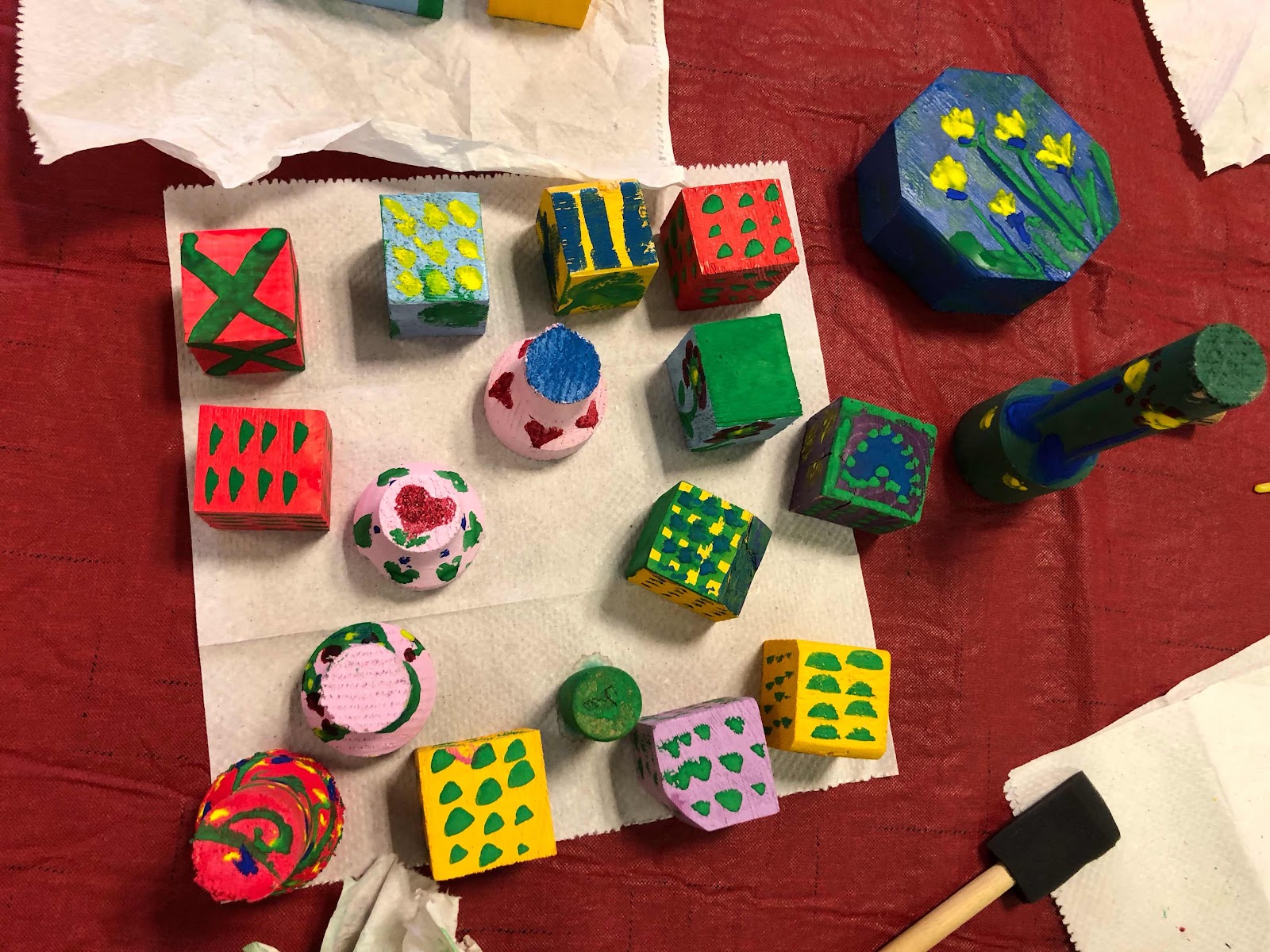
[The picture above are some of the blocks that our church members painted for Passion Works during our Athens First Saturday gathering this weekend. In addition to this project, we also made blankets for the community, arranged and delivered flowers to local hospital patients, and led a worship service for the residents at Lindley Inn Assisted Living. For the Sunday sermon on the 2nd Sunday of our “Twelve Disciples of Jesus” Lent series, click here.]


Lord Jesus, how can you be so calm when everything around you is falling apart? Soon, you will be betrayed, denied, arrested, flogged, and crucified and yet you are at peace as you prepare for what is to come.


During this season of Lent, teach us what it means to trust in our gracious Heavenly Father the way that you trusted him around that Last Supper table. Teach us to be forgiving the way that you are forgiving. Teach us to be open to the Holy Spirit, the way that you were open to the leading of the Spirit in your ministry. Teach us to be calm during these anxious times.


Lord Jesus, just as you kept your focus on your mission and purpose, remind us of the mission you have given to each one of us; to be a church that welcomes all, to share our faith with others, to do all the good we can to all the people we can, to be more willing to listen than to speak, to support those who were in the path of the recent tornados down south, to use the gifts you have given us to bless others, and to nurture our own souls as we move onto perfection in this life. 


O Lord, help us to grow in what it means to be a disciple-making church. Bless our teachers, our small group facilitators, our prayer coordinators, our Leadership Board members, our hospitality volunteers, our singers, our musicians, our staff members, our Growing Tree Preschool teachers, our Monday Lunch volunteers, our altar guild and liturgical arts helpers, and all of our ministries that help people to grow in being your disciple. 


And Lord, help us to not be too envious of those who are away from church today enjoying Spring Break. We are happy for them. Help us to not be too envious.


But seriously, Lord thank you for giving us these times on the calendar like Spring Break and like the season of Lent that push us out of our normal routine so that we can look at our lives and our faith from a fresh perspective.


And thank you for the routine of rituals like praying the Lord’s Prayer which we now join in praying together…


“Our Father, who art in heaven…”

Sunday, March 8, 2020

Sermon (March 8) by Rev. Robert McDowell


     We continue our Lenten series on the twelve disciples by focusing on James the Lesser and Thaddeus.  We’re using “The Last Supper” painting by Leonardo da Vinci to highlight each disciple.

     Last Sunday, I shared some of the key features of this famous painting. The reason Leonardo da Vinci painted this scene from the Bible was to help a religious order of monks to meditate on this scene whenever they would gather for a meal in the refectory. In a similar way, we also have the opportunity to meditate on this scene of Jesus with his disciples during the Last Supper.

     A friend of mine who’s an artist pointed out another key feature of this painting that I think we will find very meaningful. To help us appreciate this feature, we’re going to look at another picture of The Last Supper painting that has lines that point to Jesus.


     My artist friend says that these lines help us to see how Leonardo da Vinci was using a 1 point perspective. This was used during the Renaissance period which is the time period for this painting. Leonardo da Vinci wants our eyes to be drawn toward Christ as the focal point. 

     This was da Vinci’s creative way of reminding us that even though we may turn away or deny Christ, we can still be drawn back to him as the center of our lives. The message is that there is always hope and the opportunity to begin anew in our faith which is one of the reasons why the church observes the Season of Lent.

     These several weeks leading up to Easter are an important time for us to refocus our lives on Jesus Christ and to be one of Jesus’ disciples, regardless of how we may have strayed from him in the past.  I’m grateful for these artistic insights.

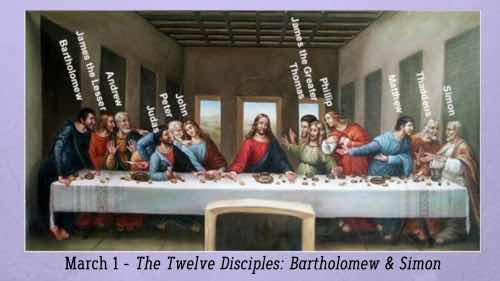
     Let’s begin this morning by looking at the disciple, James the Lesser. In the painting, he is the 2nd disciple from the left. He’s next to Bartholomew also known as Nathaniel who was one of the disciples we focused on last Sunday.

     If you remember, the disciples are reacting to when Jesus told them that one of that would betray him.  Notice how James the Lesser, the 2nd disciple from the left is reacting to Jesus’ words. 

     He is reaching toward Peter and you’ll notice that Peter is leaning toward Jesus. Peter doesn’t seem to be aware that James the Lesser is touching his shoulder. What do you think James the Lesser is thinking about as he tries to get Peter’s attention? This painting invites us to reflect on his reaction.

     So what do we know about James the Lesser? Well, it’s a little complicated. The New Testament refers to at least two people who were known as James, probably three, and maybe even eight.

     If you’re keeping score, here are the eight references of the name, James in the New Testament. 

     There’s a reference to James the Greater who was also one of the twelve disciples. Because he appears in the same list as James the Lesser, we know that there are at least two people known as James. 

     We also have James, the brother of the Lord, the brother of Jesus. We have a James who wrote the Epistle of James. There’s James, Son of Cleopas. There’s a James the Nazarene. We also have James, a kinsmen of Jude who was also known as Thaddeus who is the second of the two disciples we are focusing on today.

     And last but not least, we also have James who was the brother of the writer of the “Epistle of Jude” which is the name of a very short book found in our New Testament. This all leads to an important question. Are any of these other James references the same person as the disciple, James the Lesser? If so, that would give us a lot of information about this disciple.

     During biblical times, James was a very common name, so there very well could have been many followers of Jesus with this name.

     Most scholars believe that James, the brother of Jesus was the one who wrote the “Epistle of James” because he was the key leader of the church in Jerusalem. He also was known for his ministry with Christians who were from a Jewish background which is the focus of the epistle that bears his name.

     There’s some speculation that James the Lesser who is also known as the Son of Alphaeus might have been the disciple Matthew’s brother since Matthew was also known as the son of Alpheus.  We can only speculate.

     Other scholars wonder if James the Lesser and Thaddeus, our other disciple for today might have been brothers. Both Acts and Luke refer to Thaddeus as the son of James. You might be wondering how this would make them brothers but in the Greek language, the word for “son” and the word for “brother” were often used interchangeably. 

     How many of you are still with me? I think this is a good time to have a pop quiz!  This will be worth half of your grade for the spring semester. 

     The truth is that we don’t have a whole lot of information about James the Lesser. Maybe he had an inferiority complex with a name like that, especially with another disciple who was known as James the Greater. 

      Outside of the bible, church tradition tells us that when James the Lesser was 96 years old, he was thrown off the top of the Temple in Jerusalem because of his faith in Jesus Christ. In a way, this reminds me of the story of when Jesus was in the wilderness and the devil tempted Jesus to jump from the Temple and have his angels save him. Of course, Jesus refused.

     As the story goes, they threw James the Lesser off the Temple. He somehow managed to get up. He staggered around. He then begged God to forgive them for what they had done. This angered the people and so they clubbed him to death and sawed him into pieces. This is why the traditional symbol for James the Lesser is a saw.

     I wonder if this story was told about him because of a reputation for being a very forgiving person in his ministry. This is an important thought for us especially in this season of Lent leading up to Holy Week and Good Friday. As Jesus was hanging on the cross, he looked down upon the people who were taunting him and said, “Father, forgive them for they know not what they do.”

     Last week, Penny and I watched a documentary on a tragic story that happened in Mansfield, Ohio back in 1990. A husband was convicted of murdering his wife. A key witness for the prosecution was their eleven year old son who was in his bedroom at the time and heard what was happening. 

     The documentary that we watched focused a lot on how this young boy who is now around 40 years old has been traumatized by those memories. Collier has gone on to have a successful career. He actually ended up going here to Ohio University. For these past 30 years, he has been writing to his father to get him to admit that he murdered his mother, something which he continues to deny even though he has a life sentence.

     Collier recently went to Marion Correctional Institute to try one last time to hear his father come clean with what had happened. But he still denies it. 

     After that meeting at the prison, Collier met with his therapist and expressed how he isn’t able to forgive what his father has done. And the therapist said something really, really interesting about forgiveness. He told Collier that forgiveness doesn’t necessarily mean reconciliation. It means that point when we can let go. Let go of what you can’t change.

     When I heard that, it gave me this new understanding of forgiveness which is on one level, doing what you can do to seek reconciliation, but when the other party is not willing to make the effort, forgiveness might mean simply letting go. The therapist, then encouraged Collier that the way to let go is to allow yourself to grieve. 

     Lent is a time for us to seek forgiveness and be forgiving, but to also let go of the hurt and the pain. The stories surrounding James the Lesser invites us to be forgiving regardless of how others may or may not respond. Forgiveness might mean allowing ourselves to grieve and to let go of the pain.

     Let’s move on to the disciple, Thaddeus. Thaddeus has three nicknames. He is known as Jude, Judas, and the King James Version uses the name, Labbaeus.

     In “The Last Supper” painting, Thaddeus is the 2nd disciple from the right as you are facing the painting. You’ll notice that Thaddeus is looking at Simon the Zealot who we focused on last Sunday. If you remember, Simon the Zealot could very well have been someone the other disciples turned to during difficult times. Simon is known as the “go to” disciple.

     Now, why did Thaddeus have several nicknames? Since one of his names was Judas, many bible scholars think that it was to distinguish him from Judas Iscariot, the disciple who had betrayed Jesus. The word, “Thad” literally means, “chest.” Maybe Thaddeus was chosen as his new name because of his ability to bench press 400 lbs. We don’t know. Just speculating.

     His nickname, Labbaeus literally means “heart.” For all we know, he might have been a very passionate person in the way he lived out his faith.

     Unlike James the Lesser, we do have a story about Thaddeus in one of the gospels.  It’s the gospel reading that we heard earlier in the service.  Interestingly enough, this story is set in the context of the Last Supper. 

     After this tense scene when Jesus tells them that one of them will betray him and Judas Iscariot leaves the scene, he begins to prepare them for his crucifixion and when he would be leaving them. Of course, the disciples do not understand what Jesus is trying to tell them because it doesn’t make any sense to them. 

     Their expectation was for Jesus to continue leading them, not end up dying on a cross. We have the benefit of hindsight, but they were trying to figure out what Jesus was trying to tell them. 

     In our Gospel reading from John chapter 14, Jesus tells the disciples, “They who have my commandments and keep them are those who love me; and those who love me will be loved by my Father, and I will love them and reveal myself to them.”

     This prompts Thaddeus to ask Jesus a question and notice that it says, “Judas” and in parenthesis, it says, “not Iscariot.” Again, this is why Thaddeus was given a different name to distinguish him from Judas Iscariot. 

     Thaddeus asks Jesus, “Lord, how is it that you will reveal yourself to us, and not to the world?”  He’s trying to grasp where Jesus is going with all of this.  And Jesus goes on to reassure them that even after he is gone, the Father will send them the Holy Spirit who will continue to teach them everything and remind them of all that he has told them.

     Jesus kept his promise because on the fiftieth day after the empty tomb, the Holy Spirit came upon the disciples and this is what empowered the disciples to continue what Jesus had started. They boldly proclaimed the good news of Easter and they were able to do many signs and wonders and point people to the Risen Christ. 

     The question that Thaddeus asked Jesus following the Last Supper wasn’t fully answered until that day when the Holy Spirit came upon the disciples.  This is why the traditional symbol for the disciple, Thaddeus is a flame around his head. The flame is a symbol of the Holy Spirit.

     Jesus wanted Thaddeus to know that he would always be with them through the presence of the Holy Spirit.  I’m glad that Thaddeus asked Jesus what he meant because it gave Jesus the opportunity to reassure the disciples that he would continue to be with them even after his death.

     An elderly church member was telling me how difficult it’s been since her husband’s death several years ago. She said that when he passed away, she felt all alone.  Everything changed when he died.

     She said that her husband would always drive them places and now she was in the driver’s seat. She said that every time she got in their car to go somewhere, she had a little conversation with God. She would say, “Well, Lord, it’s just you and me now. I know you are with me. Guide and direct me in all that I do.”

     Isn’t that incredible? It was her way of reminding herself that she wasn’t alone. The Holy Spirit has been guiding her every step of the way. I’m wondering if this is something we each might do during this Season of Lent. Make it a point each day to have a little conversation with God. Remember that God is always with you, even if you are feeling alone and wondering what the future holds.

     That’s really all we know about the disciple, Thaddeus. Most bible scholars do not think that he is the same person who wrote the short letter of Jude that we find in the New Testament. Even though one of his nicknames was Jude, that letter was probably written by another person named Jude.

     Beyond the bible, church tradition tells us that Thaddeus ended up serving as a missionary in Syria and Armenia.  And it’s worth noting that the famous St. Jude Hospital which provides treatment and research for children with cancer is named after Jude or Thaddeus the disciple. Thaddeus is known as a disciple who did a lot of good for people.

      As we come to a close on these two disciples for today, there are a couple of questions for us to reflect on this week.

     Like the disciple James the Lesser, are you forgiving toward those who have wronged you? 

     And like the disciple Thaddeus, will you remember that you are never alone because you have the Holy Spirit at work in your life?

     Next Sunday, we will focus on two more disciples, Andrew and Phillip.


The Twelve Disciples: James the Lesser & Thaddeus
Sermon Discussion Questions
John 14:18-24
March 8, 2020

We are in the 2nd week of an 8-week season of Lent series on the twelve disciples of Jesus. We are using the famous 15th century painting, “The Last Supper” by Leonardo Da Vinci as a helpful guide for us. It was painted for use in the dining hall of a monastery where the monks who were not permitted to talk would be able to meditate on this very important scene from Holy Week when Jesus was having a Passover meal with his twelve disciples. Look at this version of the painting that includes lines to help us see how Da Vinci wants us to notice how everything points toward Christ. This is known by artists as the “1 Point Perspective.”


In what ways can you spend more time focusing on Christ during this season of Lent? Share some of these specific ways.

James the Lesser is the 2nd disciple from the left in the painting. He is next to the disciple, Bartholomew/Nathaniel who we focused on last week. In the painting, the disciples are reacting to Jesus’ words that one of them would betray him. Notice that James the Lesser is trying to get Peter’s attention who is looking at Jesus. There are eight references of the name “James” in the New Testament which makes it difficult to sort out who each one is. James was a very popular name during biblical times. One of the other twelve disciples is known as James the Greater. Outside of the Bible, church tradition tells us that James the Lesser was thrown off the top of the Temple for his faith. He survived the fall and immediately prayed to God to forgive the people for what they had done, but they clubbed him to death. He was then sawn into pieces which is why the symbol for James the Lesser is a saw. The story about how James the Lesser was forgiving toward the people who had tried to kill him reminds us of when Jesus was hanging on the cross and said to his tormentors, “Father, forgive them.”

What helps you to be forgiving toward people who have hurt you? How can we be witnesses of God’s forgiving love in how we respond to others?

In the sermon, Pastor Robert shared the story of a therapist who told one of his patients who was seeking reconciliation with his father, that forgiveness doesn’t always mean reconciliation. His father was unwilling to repair the relationship even though the adult son gave him every opportunity to do so. The therapist told the son that sometimes forgiveness is about letting go of past hurts, accepting the reality of a broken relationship, and allowing ourselves to grieve the loss of the relationship.

What do you think of this perspective of forgiveness? Do you agree that forgiveness doesn’t necessarily mean reconciliation?

Thaddeus is the other disciple we are focusing on this week. In the painting, Thaddeus is the 2nd disciple from the right. He is looking toward Simon the Zealot who we focused on last week. Thaddeus was also known as Jude, Judas, and Labbaeus. In our Gospel reading this week, Thaddeus asks Jesus, “Lord, how is it that you will reveal yourself to us, and not to the world?” Jesus reassures him and the disciples that after he leaves them, the Holy Spirit will come and will remind them of everything he taught them. This is why the symbol for the disciple, Thaddeus is a flame around his head. The flame is a symbol of the Holy Spirit.

What does it mean for you to know that Jesus is present in our lives through the Holy Spirit? How does the Holy Spirit empower, encourage, and equip you to live out your faith?

Tradition tells us that Thaddeus ended up serving as a missionary in Syria and Armenia. The famous St. Jude Hospital which provides treatment and research for children with cancer is named after this disciple’s nickname which is Jude. Thaddeus is therefore known as a disciple who has one a lot of good for people. 

What are some specific ways that you can do good for someone else this week?

Monday, March 2, 2020

Sunday Pastoral Prayer (March 1/Lent) Athens First UMC


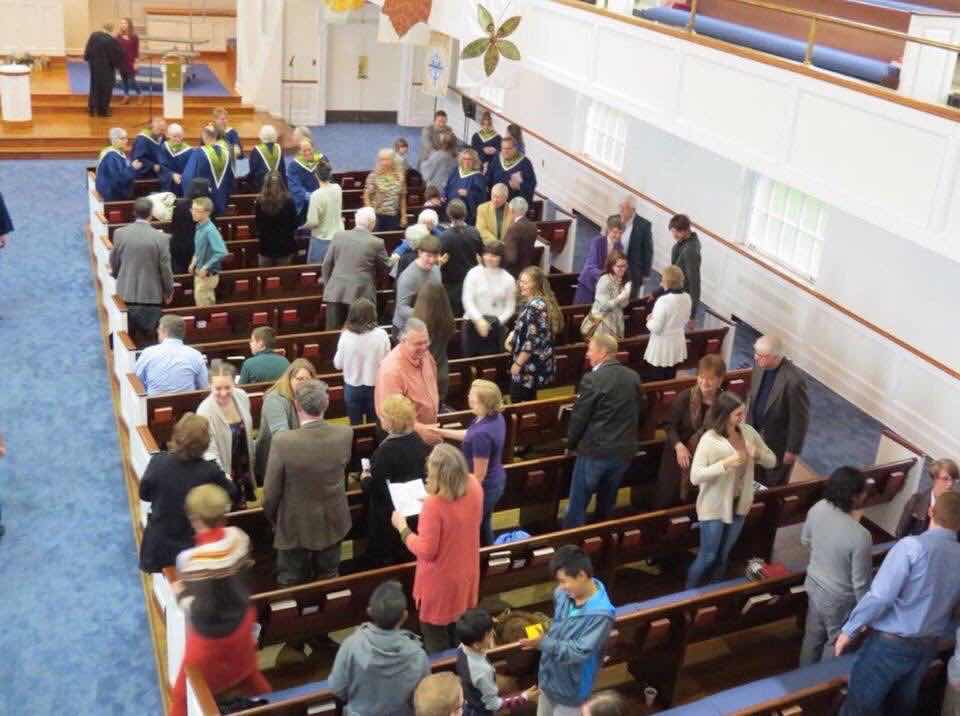
[The greeting time in our worship services is liturgically known as “the passing of the peace.” Our Christian faith has always been a communal faith where we remind ourselves that we are brothers and sisters in Christ. The photo above is one of our Sunday worship services where we welcomed each other with the peace of Christ. Due to the flu season and the uncertainty over the coronavirus, this week for worship, we replaced hand shaking with patting our heart as we greeted one another. It will take time getting used to this new method, but think of it as giving up the sharing of germs for Lent. For the sermon which began our 8-week series on “The Twelve Disciples of Jesus,” click here.]


Lord Jesus, thank you for choosing twelve ordinary people to become your disciples. During these next several weeks, help us to learn from them so that we can be your followers, too. 


Give us a zeal for our faith like Simon the Zealot had. And give us an open mind to know you more deeply like Bartholomew had when he first met you. 


And Lord, as I think about it, those two qualities don’t seem like they can coexist; having zeal and an open mind. And so, we pray that our zeal for you doesn’t turn into tunnel vision where we falsely believe that we have the corner of the truth, but we also pray that having an open mind doesn’t lead us to having a luke-warm faith. Lord, you said that following you wouldn’t be easy.


Give us a zealous faith from the time that we wake up in the morning to the time that we call it a day. Help us to make every moment count. Give us an open mind where we listen to others in the way that we would like others to listen to us. 


Lord, my deepest prayer during this season of Lent is for each one of us to grow as your disciples in what it means to have a loving faith, a learning faith, and a living faith. We know this will mean dying to some things that will allow for new life to happen. May a greater zeal and open mind in our faith be an important part of our season of Lent journey with you and with each other.


In this world that is filled with so much fear, worry, and anxiety over a divisive political culture, a spreading global virus, and things we can’t control, remind us to pray the prayer you taught your disciples and now remind us to say together…


“Our Father, who art in heaven…”

Sunday, March 1, 2020

Sermon (March 1) by Rev. Robert McDowell


    As we begin the Season of Lent, we also begin a new sermon series on who were the twelve disciples of Jesus. I like the timing of this because it gives us an opportunity to journey with the disciples as they followed Jesus to the cross and to the empty tomb.

     You might notice that for six of the eight Sundays, we’re going to need to pair up some of the disciples so that we can cover them all. We’re actually going to look at thirteen disciples since Matthias was the one who replaced Judas Iscariot who betrayed Jesus and ended up taking his own life.

     There are four listings of the names of the disciples in the New Testament and these are found in Matthew, Mark, and Luke and the Book of Acts. In all of these lists, the disciples are paired up, but the pairings are not always the same among the four lists. And so, for this sermon series, I have decided to pair up the disciples by the places where they are seated in the famous Last Supper painting by Leonard da Vinci. 

     Let’s take a look at the painting of the Last Supper which includes the names of the disciples. For the most part, we’ll be pairing up the disciples by starting from the outside of the table and working our way toward the middle.

     Before we begin focusing on the disciples, here are some interesting facts about this incredible painting of “The Last Supper.” It took three years for Leonardo da Vinci to complete this painting so it was a monumental task for him. He started it in 1495 and completed it in 1498. 

     He painted it at the request of one of his wealthiest clients who was the Duke of Milan. The Duke wanted this painting to be placed in the refectory or what we would call the dining hall of a local Dominican Church. He wanted the monks who worshipped there to be able to meditate on this Last Supper scene while they ate their meals.

     Now, these monks ate their meals in silence, so can you imagine how powerful this must have been for them as they reflected on this scene whenever they gathered together for a meal. This ended up being a very large painting. It’s 15 by 29 feet so it takes up a lot of space.

     When Leonardo da Vinci painted this, he wanted to experiment with his own version of a fresco painting by using a certain kind of paint that ended up not working very well. In fact, the paint that he used for this painting began peeling off just a few months after he completed it. Only 20% of the original paint has survived this painting which means that most of this painting needed to be restored.

     Like the monks who had the opportunity to reflect on this meal when Jesus was gathered with the disciples for the Last Supper, we too can use this painting during this Season of Lent to reflect on each of these disciples. It will help us grow in what it means for us to be one of Jesus’ disciples.

     I have one more feature of this painting that is very important to highlight as we begin this series and it’s one that I hope we will always keep in mind over these next several weeks. In his own creative way, notice that there is what appears to be an empty spot at the one end of the table next to the disciple, Simon. 

     By including this empty seat, Leonardo da Vinci is inviting you and me to take a seat at the table with Jesus and his disciples. This empty space is to remind us to not be passive spectators during this Lenten journey. Jesus calls us to be at the table with him.

     With this background information in mind, let’s begin looking at our very first disciple in the Last Supper painting, the disciple Bartholomew. Looking at the painting of the Last Supper, Bartholomew is on the far left end of the table. 

     When Leonard da Vinci painted this picture, he wanted to humanize each of the disciples by showing their individual expressions. They are reacting to Jesus who has just told them that one of them will betray him. 

     Each disciple reacts in a unique way, but notice how Jesus is reacting. Unlike the disciples, Jesus remains calm. Notice that Jesus has the palms of his hands facing upward as a symbol of his trust in God.

     This is also symbolizing how Jesus is calmly accepting his mission in the face of adversity. Even though he will be betrayed, the disciples will deny him, he will be arrested, and then will soon be crucified on a cross, Jesus remains calm and resolute. 

     In contrast to Jesus being calm and in control, carefully observe how the disciple Bartholomew is reacting. Notice that he is standing with his arms leaning on the table, almost in a defiant attitude. He looks to be responding to Jesus by saying, “Who would do such a thing!?”

     This is how I see da Vinci depicting Bartholomew in this painting. Maybe you see it a little differently. That’s the beautiful thing about art. It’s meant to help us use our imagination.

     So, who was the disciple Bartholomew and what do we know about him besides what we see in this painting? 

     John, the Gospel writer never refers to the name, Bartholomew in his entire gospel. If you remember, John is the only gospel writer who does not include a list of the twelve disciples like we find in the other three gospels. 

     The thinking here is that it would be strange if John would totally leave out one of the twelve disciples. You would think that he would have at least mentioned Bartholomew’s name, but he never does.  

     If you look at the four lists of the disciples including the one in the Book of Acts, we find that the disciple Phillip is paired with Bartholomew three out of the four times. Even though John doesn’t mention the name Bartholomew, he does offer us the story about Phillip and a man named, Nathaniel. 

     Since the disciple, Phillip is connected with both Bartholomew and Nathaniel, it stands to reason that this could very well be the same person. Are you still with me? This can be a little confusing and what I’m offering is only an educated guess. But I believe that Bartholomew and Nathaniel are two names for the same disciple.

     In our Gospel reading this morning, Phillip finds his friend, Nathaniel also known as Bartholomew and tells him that he has found Jesus of Nazareth, the one who Moses and the prophets had promised would come.

     This is one of the more humorous stories we find in the bible because when Phillip tells his friend about Jesus, instead of offering a statement of faith, Nathaniel or Bartholomew offers a sarcastic comment, “Can anything good come out of Nazareth?”

     And I love how Phillip responds to Nathaniel’s skepticism. He simply tells him, “Come and see.”  Those are three of the best words that we can share with others about our faith.  Sometimes, we think that we have to be bible scholars before we can begin to tell people about our faith.  All we really need to do is offer this simple invitation, “Come and see.”

     The humor in the story continues when Jesus sees Nathaniel or Bartholomew coming toward him. And you have to wonder if Jesus could already sense Nathaniel’s skepticism and sarcasm because he takes the initiative and offers his own little fun jab at Nathaniel. He greets Nathaniel by saying, “Now, here’s an Israelite who can do no wrong.”

     Nathaniel, who was probably surprised by Jesus’ quick wit, asks Jesus how he knew him. And when Jesus said that he had already noticed him under the fig tree before Phillip had called him, that’s all Nathaniel needed to realize that Jesus was who Phillip said he was.

    And this leads Nathaniel to say to Jesus, “You are the Son of God, the King of Israel.”

     I love this little exchange between Jesus and Nathaniel because it reminds us that Jesus meets us right where we are. “If you can make fun of my backwoods town of Nazareth, then I can talk about how you are the first person who has never sinned.”

     In that brief conversation, Nathaniel had met his match and Jesus won him over. This just goes to show how Jesus always meets us where we are. If you’re mature in your faith, Jesus will meet you at the level of your maturity. If you’re skeptical and doubting, Jesus will meet you at the level of your doubts. If you’re questioning your faith, Jesus will meet you at the level of your questions. Jesus always meets us where we are.

     We’ve all been in those social situations where you arrive at an event and you’re a little nervous because you don’t know anyone there.  But what a relief when somebody who is gracious in spirit comes up to you, offers an introduction, and includes you with the rest of the group. 

     This is what Jesus did when he met Nathaniel or Bartholomew. He put him at ease with some humor that he wasn’t expecting. But notice that Jesus doesn’t stop there. Immediately after Nathaniel refers to Jesus as the Son of God, Jesus tells him, “Do you believe in who I am just because I said that I saw you under that fig tree? Spend some time with me and you will see so much more, Nathaniel. You will see the heavens opened and the angels of God ascending and descending upon the Son of Man.”

     It’s like Jesus is telling Nathaniel, “You haven’t seen anything yet.”

     The only other time that the disciple, Nathaniel is mentioned in the scriptures is the time when Jesus appeared to the disciples for the second time after his resurrection by the Sea of Galilee. And I can’t help but wonder that when Nathaniel saw Jesus, now resurrected from the dead, that he was remembering these words of Jesus during their first encounter.

     “You will see greater things than these, Nathaniel.” I would think that rising from the dead would qualify as one of those greater things that Jesus had in mind.

     And so, when I think of Nathaniel or Bartholomew and what it means to be a disciple of Jesus Christ, I think of how important it is to have an open mind to who Jesus is. It means letting go of any preconceived notions of Jesus that would place limitations on what Jesus can do in and through us.

     The Roman historian, Eusebius of Caesarea from the 3rd and 4th centuries recorded that Nathaniel or Bartholomew ended up going to India to preach the good news of Jesus Christ. He also claims that he went to Armenia and it was there where he was killed for his faith. He was skinned alive and beheaded according to church tradition. This is why the emblem for Bartholomew includes three knives. 

     In Michelangelo’s famous Last Judgment painting, Bartholomew is shown holding his own skin. The face on the skin is generally considered to be a self-portrait of the painter, Michelangelo.

     And by the way, as we shall see as we go through this series, according to church tradition, of the twelve disciples, only one of them did not die a violent death for his faith and that was the disciple John who will be our focus on Easter Sunday. The only other exception was Judas Iscariot who took his own life after he betrayed Jesus. 

     So that’s really all we know about the disciple Bartholomew or Nathaniel which ever name you prefer. 

     Let’s briefly talk about the disciple, Simon. On the far right side of the painting, your right, you can see Simon. 

     It’s interesting that the two disciples to his right are looking his way as Jesus offers the words, “One of you will betray me.” Why are these two disciples looking at Simon?

     It’s probably Leonardo da Vinci’s way of showing that the disciple, Simon was seen as a leader, as someone the other disciples could turn to during difficult times. Simon had two nicknames. He was known as Simon the Zealot and Simon the Cananean. 

     The reason there are these two nicknames for Simon was because the word “Cananean” is an Aramaic word that literally means “to be zealous.” Those two words, “Cananean” and “zealot” mean the same thing. 

     These nicknames also help to distinguish the disciple Simon from the other disciple who went by the same name. We know the other Simon as Simon Peter, probably the most well known of all the disciples and who will be our focus on another Sunday.

     If Simon was anything that his nicknames indicates, he probably was somebody who was very zealous for his faith. He would have been very passionate about the scriptures and his commitment in being a disciple of Jesus. I think that Leonardo da Vinci is paying a very nice compliment to Simon in this painting by having the disciples turn to him for support when Jesus shared those very troubling words that one of them would betray him.

     When I think of Simon the Zealot, I think of John Wesley, the 18th century founder of Methodism. He too was known to be very zealous in his faith. Many people who didn’t appreciate Wesley’s zeal, labeled him an “enthusiast” which in 18 century England was a very derogatory word to use of someone.

     To be an “enthusiast” meant that you were somebody who acted impulsively and irrationally without using logic and linear thinking. What some people didn’t realize was that John Wesley emphasized the use of reason as well. He believed that both the head and the heart were important in living out one’s faith in Jesus Christ.

     The scriptures don’t have a lot more to tell us about who Simon the Zealot was. Church tradition teaches us that Simon, along with another disciple we will look at later, Jude, traveled together to Persia to share the good news of Jesus Christ. While they were in Persia, they were killed for their faith. Some sources say that Simon was sawed in half and other sources say that he was beheaded.

     Jesus told the disciples to expect opposition to their message. I’m sure they were well aware of this since Jesus himself ended up dying on a cross for the sins of the world. Sometimes, our walk with Christ involves suffering and pain, but God promises to always be with us.

     The symbol for Simon is a boat hook and fish because he traveled by sea in order to be a fisherman of people and share his faith with as many people as he could.

     As we conclude this first Sunday in our focus on these first two disciples, Bartholomew and Simon the Zealot, here’s what I would like us to focus on this week. The first question is, like Bartholomew, am I willing to set aside my preconceived notions of who Jesus is and follow him?

     And the second question is this: Like Simon the Zealot, am I zealous in my relationship with Jesus Christ? Am I zealous in my worship of God, in my obedience to Christ, and in the sharing of my faith with others?

     Next Sunday, we’ll focus on two more disciples, James the Lesser and Thaddeus.


The Twelve Disciples: Bartholomew & Simon the Zealot
Sermon Discussion Questions
John 1:43-51
March 1, 2020

During the season of Lent and through the week after Easter Sunday, we will be focusing on the twelve disciples of Jesus and seeing what they can teach us about being followers of Jesus. To help us do this, we will be using the famous 15th century painting of “The Last Supper” by Leonardo Da Vinci as our guide for each of the disciples. Here are some interesting points about this painting that might be helpful to us along the way.

1) Da Vinci painted this from 1495 to 1498 at the request of one of his wealthy clients who was the Duke of Milan. It was for the dining hall (refectory) of a local Dominican Church so that the monks who ate in silence would be able to meditate on the spiritual meaning of the Last Supper during each meal.
2) It’s a very large painting, 14 x 25 feet! Unfortunately, the particular kind of paint that Da Vinci used began peeling off only a few months after it was completed. Only 20% of the original paint remains.
3) The painting will be helpful to us during this study because of Da Vinci’s creative way of depicting each disciple’s reactions to Jesus’ words, “One of you will betray me.” Notice that there appears to be an an empty space at the end of the table near the disciple Simon. This is Da Vinci’s way of inviting us to take a seat at the table and be participants and not merely observers.
4) While the disciples in the painting offer a variety of troubled reactions to what Jesus tells them, notice that Jesus remains calm with the palms of his hands facing upward toward God.

This week, we focus on the disciples, Bartholomew (Nathaniel) and Simon the Zealot. There are four scripture passages that list the twelve disciples. Whenever the scriptures list the disciples, Bartholomew is paired with Phillip. Strangely, Bartholomew never appears outside of these lists. Since Phillip is the one who invited Nathaniel to meet Jesus, it is believed that Bartholomew and Nathaniel are the same person. Nathaniel can’t believe that the Messiah would come from an unknown town in Nazareth which leads to a spirited conversation between the two. Church tradition (post-bible) tells us that Nathaniel ended up going to India to preach the good news of Jesus and was skinned alive and beheaded. It’s because of this that the symbol for Nathaniel is three knives. Notice in the painting that Da Vinci depicts Bartholomew (Nathaniel) standing with his arms leaning on the table in a defiant attitude. One of the things that we learn from Bartholomew is that it is important to set aside our preconceived notions of who we think Jesus is so that we can see him more clearly.

What helps you to have an open mind about who Jesus is?

Simon the Zealot (not the same as Simon Peter) is the other disciple for this week. He is on the far right side of the painting. The disciples near him are turning to him for answers to why Jesus would say that one of them would betray him. This suggests that the other disciples turned to Simon for support during confusing times such as this. Because he was given the extra name of “Zealot,” some have speculated that this is because he was very zealous in his faith. Perhaps he was even a political revolutionary who was looking for a Messiah to overthrow the Romans and lead Israel to independence. Church tradition tells us that Simon the Zealot joined Jude in traveling to Persia to share the good news of Jesus and they were killed for their faith. It is said that Simon was either sawed in half or beheaded. He is symbolized by a boat hook and fish reminding us that he traveled by sea in order to be a fisher of people for the gospel.

Since Simon was known for his zealous faith, what helps you to be zealous and fervent in your relationship and commitment to Jesus Christ?

Conclude your time with this prayer of reflection:

Lord Jesus, on this first week in the season of Lent, we confess that that we have not always been your faithful disciples. We have heard your call to follow you, but we have often played it safe instead. Help us to become more like Bartholomew and Simon who served you with zeal and with an open mind. Thank you for your grace which accepts us for who we are and transforms us into the disciples you want us to be. Amen.

Thursday, February 27, 2020

Sermon (Feb. 27/Ash Wednesday) Athens First UMC


     How long does it take to change?  There is a  popular  wellness book that proposes that within 10 days, if you follow the nutritional guidelines, you will see a noticeable difference in your body and well being. In just 10 days!  But how long does it take to change our souls?

     Within the  Christian tradition, the season of Lent is 6 weeks long, a season where personal change is desired and expected. Lent is linked to the 40 days that Jesus  spent in the desert wilderness where he considered the path of his life. He wrestled there with how he should live out his calling. The book Meditations on the Sand emphasizes Jesus' struggle and our struggle. Listen to this portion from the book:

     “One goes to the desert to see more and to see better. One goes to the desert especially to take a closer look at the things and people one would rather not see, to face situations one would rather avoid, to answer questions one would rather forget.”

     We come together on this Ash Wednesday to take a look at the condition of our hearts. We look inside and see that there are things not quite right, things that need restoring. If we were houses, we would be described as “fixer-uppers.” 

     Lent is an annual invitation to come closer to God, to look at ourselves honestly and believe that change is possible through Jesus. We grieve over what could have been, for what should have been done and wasn't. Lent gives us the chance to go in a different direction.  If we have closed the doors of our hearts, now is the time to let life in again.

     We come and receive the ashes which starts us out on our journey. We have six weeks not to continually berate ourselves over our sins or to be overwhelmed by guilt, but to be hopeful.  Even though we are still weeks away from signs of spring, we believe that this is a season of new spiritual growth, of starting over, of being refreshed. On this journey are destination is  the new life of Easter morning.

     Whatever concerns you today - whatever weighs heavy on your hearts - look forward to how God will help you with your problems, how God will help you to see what you need to do differently, what needs to end and what needs to begin. We are on a pilgrimage even though we are not leaving home. 

     A young couple walked the 500 mile trail which stretches across northern Spain  and is called the Camino de Santiago. This is an ancient road which pilgrims have followed for centuries with the goal of arriving at the Cathedral which honors the Apostle James.

     The couple wrote an article  for a travel site with advice for other walkers. I'd like to share with you some of their thoughts with some thoughts from me also:

     Keep a notebook. Invite you to answer this question on paper: “What needs to be changed within me?” Everyday, write down some conversation with God, your own personal prayer.   And be open to where this holy conversation might lead you.

     Get a stick. They were speaking of a hiking staff that is used for balance and stability.

     What could keep us anchored, keep us from falling? Scripture reading, prayer, fasting, silent reflection are just some examples of the things we will need for balance and stability along our pilgrimage. 

     Take ear plugs. They discovered how important this was after sleeping in a hostel with 60 other  tired people lying on their backs - bunks  close together. Noise level was pretty loud!        

     How can you enjoy  more quiet?  How can you listen to God, and hear the whisper of the Holy Spirit? How can you listen to your own heart?  What needs to be turned down, turned off?

     Pack light. In college, a friend of mine worked at a camp where she back-packed for 5 day trips.. They had to carry  everything that they needed and so they were very careful to have nothing but the bare essentials.  

     In checking, a young boy's pack seemed stuffed. He had his pillow, robe, slippers, books, candy. They had to convince him that all those things would just weigh him down.

     Is there anything that prevents you from loving God?  Would you be spiritually better off if something was gone or reduced in your life?

     Talk and listen and ask for advice from other walkers. They discovered how much they could help one another . Do you have a friend that you can talk with during Lent? A friend to pray with and share your fears/hopes?

     Join us for Sunday worship beginning this Lent as we join together in our study of the twelve disciples based on “The Last Supper” painting by Leonardo Da Vinci. The sermon discussion questions in our small groups will focus on each of these disciples following each week’s sermon. 

     We will also gather together during Holy Week for our Maundy Thursday service and we will experience a reenactment of the Last Supper. That famous Last Supper painting will come alive for us on that holy night.

     Remember to join the other hikers so that we can learn from each other during our pilgrimage of faith.

     And also keep in mind, that this walk is not a race. Dr. Ellsworth Kalas says that he flunks Lent every year because his good intentions don't last for 6 weeks. He still looks forward to Lent. “Heaven continues to call him to a higher life,”he says. He keeps stretching his soul for all that God promises even though it is not all accomplished in one season.

     On Ash Wednesday several years ago, two Episcopal priests  stood outside Duke University Hospital and offered ashes to those who were entering. Some people walked  by, and some  stopped to receive the sooty mark. 

     As a cross was put on their foreheads and a prayer was said, the pastor and stranger  reflected together on their sins and God's needed grace. In this busy hospital where life and death are often side by side, there was a recognition that Jesus was also present and he offers hope. A few moments in an ordinary day can be the beginning for new life.

     During Lent we have a chance to rewrite our stories with the power of God's spirit. I hope that I am not the same person tonight as I will be by Easter morning. I want to be restored. I want my faith to be stronger. I want to see others as God sees them. I want to be courageous in my sharing of God's love.

     What is your hope for this Lent?  As you receive the ashes, you are accepting God's invitation to come home. You are on your way to being made whole.

Monday, February 24, 2020

Sunday Pastoral Prayer (Feb. 24/Transfiguration Sunday) Athens First UMC


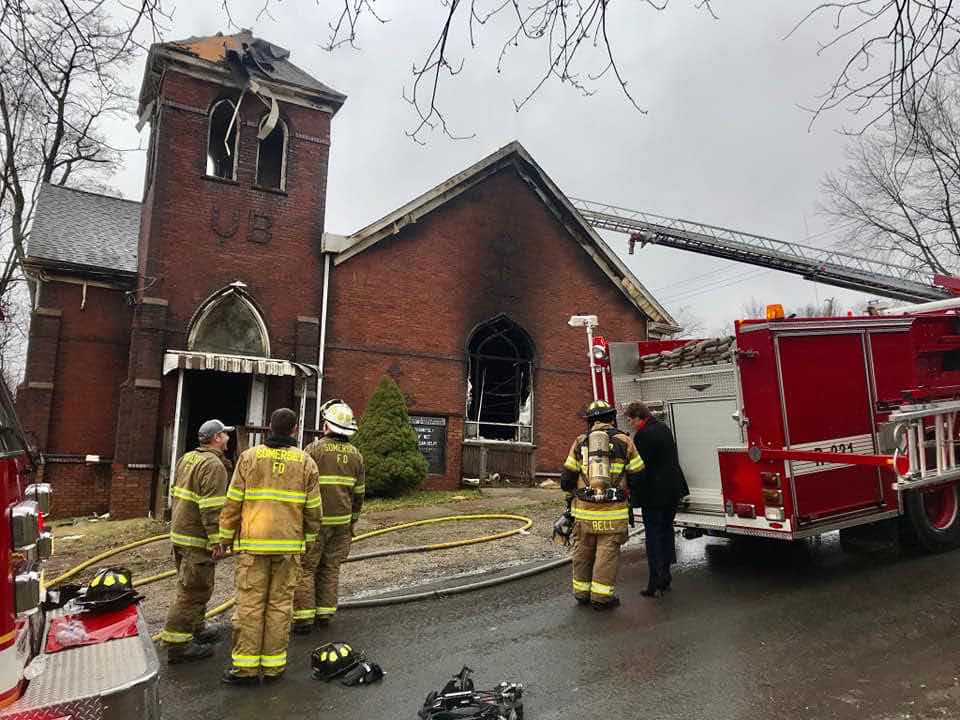
[On this Transfiguration Sunday, we included the congregation of Junction City Good Shepherd UMC in our pastoral prayer. This is one of our Foothills District churches. The building burnt down this past Tuesday. The cause of the fire is under investigation although local law enforcement has someone in custody. Our District Superintendent, Rev. Dennis Miller helped to lead their worship service at a local community center on this first Sunday following the fire. The church was built in 1875 and the letters on the front, “UB” refer to the “United Brethren” denomination which eventually merged into what is now known as the United Methodist Church. Please keep this congregation in your prayers. We specifically gave thanks that nobody was physically injured. Photo courtesy of NBC affiliate, WHIZ. For Sunday’s sermon, click here.]


O God, who is transcendent and wholly other, but who is also imminent and ever present, thank you for revealing yourself to us in so many surprising and timely ways. Thank you for those thin place moments where we are reminded that heaven and earth are closer than we can even imagine.


On this Transfiguration Sunday, we seek to be transfigured as we prepare to transition from these Sundays following the Epiphany and into the Season of Lent. Shine your light upon us. Keep us alert to where you are being made present to us. 


When you send us on an unfamiliar road, open our eyes to the slice of heaven that is suddenly all around us through the astonishing beauty of your creation or maybe as subtle as a butterfly landing gently on a grieving woman’s arm. O God, like Peter, James and John, help us to be alert to your transfiguration moments in our lives.


O God, we lift up to you the many needs that are on our hearts and minds today. We pray for those who are in need of healing. We pray for the congregation of Good Shepherd United Methodist Church in Junction City, one of our Foothills District churches whose church building burnt down this past week. We pray for them in this time of loss and are grateful that nobody was physically hurt by the fire. 


O God of transcendence and closeness, come near to us this day. May your dazzling light not only shine on the mountain top as it did for the disciples, but may it also shine upon your people when we share with each other in our small groups, when we begin our day in prayer, as we sing hymns during worship, in our conversations during the week, in making a new friend. O God of the transfiguration, come near to us this day and every day.


We pray this in the name of Jesus, the incarnate Son of God, the one who died and rose again for the sake of the world, and the one who teaches us to pray, “Our Father, who art in heaven…”


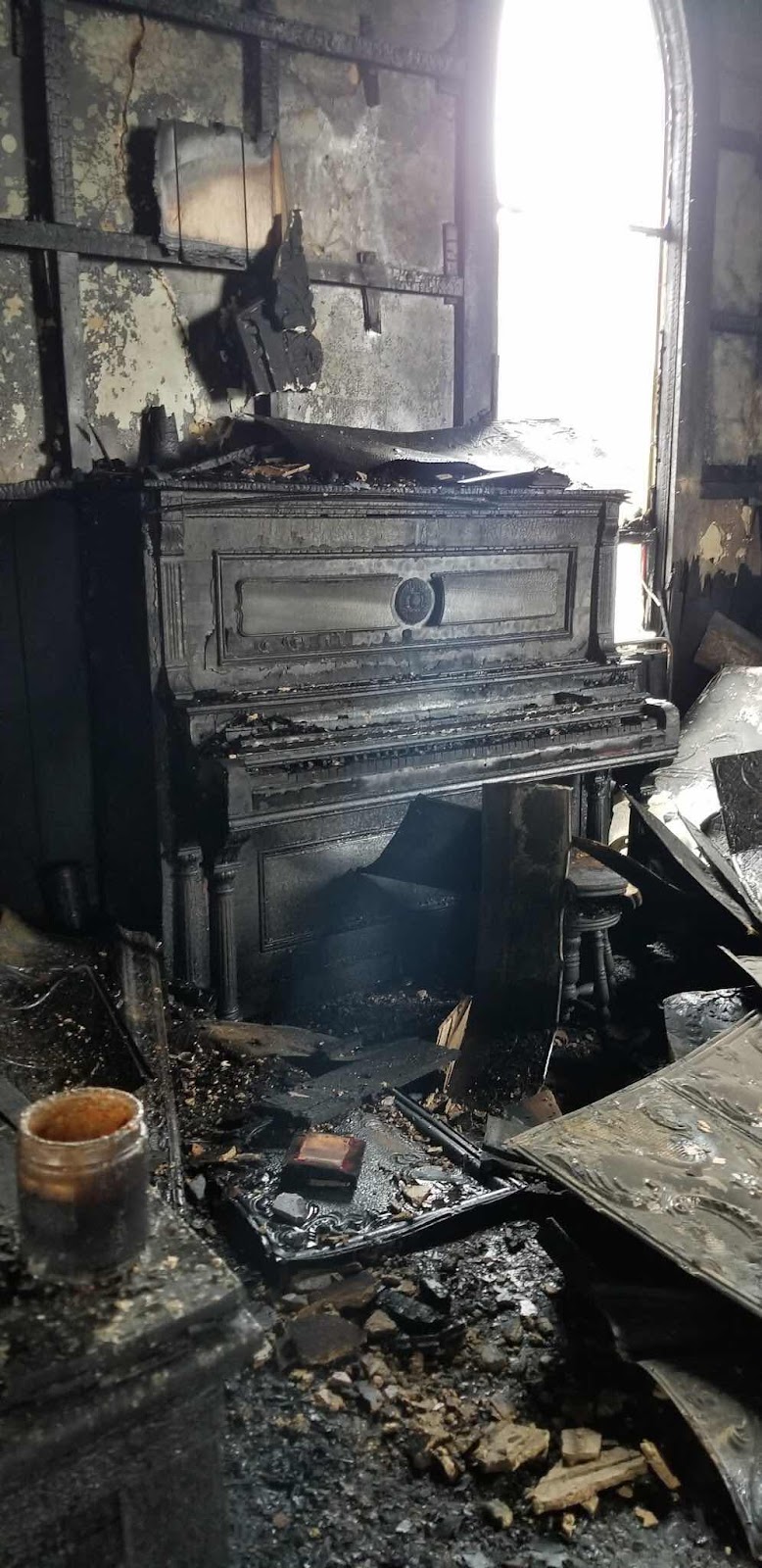
[The inside of the Junction City Good Shepherd UMC that burnt down this past week. Photo courtesy of NBC affiliate, WHIZ.]

Sunday, February 23, 2020

Sermon (Feb. 23/Transfiguration Sunday) by Rev. Robert McDowell

     Our Gospel lesson from Matthew tells us about an extraordinary event that some of Jesus’ disciples were able to experience. While Jesus and three of his disciples were on the mountain, a bright cloud covered them. Jesus was transfigured so that his face shone like the sun and his clothes became dazzling white.

     Moses, representing the law tradition, and Elijah, representing the prophetic tradition, appeared with Jesus. Then the disciples heard God’s voice tell them that Jesus was his beloved Son and that they should listen to him. The disciples were extremely frightened and fell on the ground. Jesus walked toward them, touched them, and told them to get up and not to be afraid.

     What do we make of a story like this? Do we find stories like this difficult to believe? Evidently, Peter, James, and John were caught off guard by it. It actually frightened them.

     This story of the transfiguration of Jesus raises the question about miracles. Do miracles like this really happen or was that just something that people in bible times believed?

     One summer, I noticed several billboards of a local church that invited people to their summer sermon series on the topic of miracles. The word, “miracle,” gets our attention.

     What do we make of miracles living in our post-modern 21st century world? What do they mean for us today?

     In his book, Simply Christian: Why Christianity Makes Sense,” former Anglican Bishop, NT Wright offers a very helpful story to help us think about the place of miracles in our own day and age. 

     He writes, “There was once a powerful dictator who ruled his country with an iron will. Every aspect of life was thought through and worked out according to a rational system. Nothing was left to chance.

     The dictator noticed that the water sources around the country were erratic and in some cases dangerous. There were thousands of springs of water, often in the middle of towns and cities. They could be useful, but sometimes they caused floods, sometimes they got polluted, and often they burst out in new places and damaged roads, fields, and houses.

     The dictator decided on a sensible, rational policy. The whole country, or at least every part where there was any suggestion of water, would be paved over with concrete so thick that no spring of waver could ever penetrate it. 

     The water that people needed would be brought to them by a complex system of pipes. Furthermore, the dictator decided, he would use the opportunity, while he was at it, to put into the water various chemicals that would make the people healthy. With the dictator controlling the supply, everyone would have what he decided they needed, and there wouldn’t be any more nuisance from unregulated springs.

     For many years the plan worked just fine. People got used to their water coming from the new system. It sometimes tasted a bit strange, and from time to time they would look back wistfully to the bubbling streams and fresh springs they used to enjoy.

     Some of the problems that people had formerly blamed on unregulated water hadn’t gone away. It turned out that the air was just polluted as the water had sometimes been, but the dictator wouldn’t, or didn’t, do much about that. But mostly the new system seemed efficient. People praised the dictator for his forward looking wisdom.

     A generation passed. All seemed to be well. Then, without warning, the springs that had gone on bubbling and sparkling beneath the solid concrete could no longer be contained. In a sudden explosion – a cross between a volcano and an earthquake – they burst through the concrete that people had come to take for granted.

     Muddy, dirty water shot into the air and rushed through the streets and into houses, shops, and factories. Roads were torn up; whole cities were in chaos. Some people were delighted: at last they could get water again without depending on The System. But the people who ran the official water pipes were at a loss: suddenly everyone had more than enough water, but it wasn’t pure and couldn’t be controlled.”

     NT Wright goes on to say that we in the Western world are the citizens of that country. The dictator is the philosophy that has shaped our world for the past two or more centuries, making most people materialists by default. And the water is what we today call “spirituality,” the hidden spring that bubbles up within human hearts and human societies.

     Even in our hyper scientific modern world, walk into any bookstore, and count the number of book shelves that contain books on spirituality. Evidently the waters of spirituality cannot be contained underneath the rock hard pavement of secularism. People know deep down that there is a mystery at work in the world, a mystery that leaves us speechless when heaven intersects our ordinary lives.

     We have heard people share bright light stories of how they had near death experiences in which they saw a bright light which brought them great comfort and peace and then they came back to life. Or maybe there are other dramatic and powerful stories that you have heard that defy explanation.

     While those once in a lifetime stories can be very meaningful, there are other bright light stories that happen to us all of the time in big and small ways. They happen to us in the course of our day to day activities and they remind us of that bubbling spring of water that runs through all of life.

     The Celtic Christians had a name for these moments when heaven and earth intersected in our day to day living. They referred to them as thin places. I like to refer to them as sacramental moments, those times when the sacred overlaps our time and space in beautiful and meaningful ways. 

     Where do you see God at work in your day to day living? What are those sacramental moments where God has been made present in a very real way for you?

    A little over a year ago, I drove about seven hours to attend the funeral of my ninety-four year old aunt. She represented the last family member of my parents’ generation. She was my dad’s sister-in-law. 

     Her death really impacted me because I when I would visit with her, she always had a story to share about our family that I had never heard. She was like our family historian and I loved to hear her stories about my parents and my other aunts and uncles. She was also a woman of great faith and I will always cherish those times that we got to pray together.

     As I started the long drive from southeast Ohio to attend her funeral in south central, Pennsylvania, I said a prayer in the car for God to give me a little sign of his presence in the midst of our sorrow. As I was driving through Maryland, my GPS wanted me to take a route that was different than what I normally take on my way back to see my family.

     It was near rush hour and instead of having me go into the Baltimore rush hour traffic, it wanted me to save time by turning north a little sooner. I debated in my mind if I should take this new route but I did since it said it was going to save my some driving time.

     Since this was a new route for me, I was still a little skeptical if I made the right decision. Instead of being on a highway, I was now on a two-land road. “I should have stayed on the highway,” I thought to myself. To make matters worse, it became a very curvy and hilly road. 

     Before too long, I was now in what seemed like a state park where I was now only going about 35 miles an hour and navigating through sharp curves. I was now regretting my decision.

     It was about that time, that the miracle happened. I suddenly realized that I was taking a route that was running alongside the Appalachian Trail. As I drove through this heavily forested area, it was one of the most scenic drives I had ever experienced. The fall leaves were unbelievably vibrant and the sun was so beautiful as it made those autumn colors become even more alive.

     And for what seemed like the next several miles, I was driving along a clear stream that meandered through that beautiful park. It was just unbelievably breathtaking. Honestly, it was like I was all of the sudden driving through heaven. 

     I started to think of Aunt Dot and wondered if this was what she was now experiencing in the heavenly realm. A smile came to my face when it finally dawned on me that this was the sign from God that I had prayed about several hours earlier when I left for the trip. 

     A peace flooded my soul as I continued on that drive. About a couple of minutes later, I found myself back on a highway that took me the rest of the way home. That portion of my unexpected detour was a thin place moment for me.

     God works in mysterious ways. There are transfiguration stories like this all around us. And like the disciples, we are reminded that heaven is a lot closer than we may think. 

     I shared this with you before, but it’s one of those stories that is worthy repeating. A couple of years ago, I officiated at the funeral of a young boy who died from cancer. A few months following the funeral, I needed to make some visits at the hospital. For some reason, instead of going my typical route, I went a different way to the hospital. 

     This route took me by the apartment of where this little boy used to live. As I was driving by, I noticed that his grandmother was sitting on the front steps of the house, and so I decided to pull over and see how she had been doing.

     This grandmother was so glad to see me. With tears in her eyes, she said that a little later that morning, she would be going to the cemetery to watch them place the headstone for her grandson’s grave. 

     Together, we shared a few stories about her grandson, how he had a great sense of humor and how he showed so much faith in facing his death. We laughed and we cried as we sat together on those front steps of her apartment.

     And then the strangest thing happened that I will never forget. As this grandmother was sharing a story with me, a butterfly landed on her arm. We both became silent and then we looked at each other in disbelief. 

     Before this little boy had died, he told us that God would send us butterflies to let us know that he was with God and that everything was all right. After a few moments of silence, we looked at each other and started laughing. And then we prayed together, right there on those front steps, thanking God for sending us that butterfly at just the right moment.

     I don’t know what you make of stories like this. All I know is that it felt like one of those thin places where heaven and earth overlapped in a very mysterious way. It was a holy moment that I will never forget.

     Our small groups are designed to give each other the opportunity to share our Thin Place moments with each other. They remind us like we said in our opening prayer that God is constantly reaching out to us with his transforming love. 

     These transfiguration stories remind us that the bubbling stream of God’s presence has been under our feet all along. There is no pavement that can contain it. It springs up when we least expect it.

     And the good news is that they are happening all around us in any given moment.


Stories of Transfiguration
Sermon Discussion Questions
Exodus 24:12-18 & Matthew 17:1-9
February 23, 2020

Transfiguration Sunday is when we remember when Jesus was transfigured and his clothes became dazzling white. This happened in front of some of his disciples on the mountain. It was a very unusual experience where Moses and Elijah who lived centuries before Jesus appeared alongside him. The disciples could hear a voice from heaven confirming that Jesus is God’s beloved Son. This story is an example of what we have been calling, “Thin Place Moments” where heaven and earth overlap in our ordinary lives in surprising and beautiful ways.
Share a “Thin Place Moment” that has happened to you where you felt God’s presence in a very real way. When did you recognize it as a “Thin Place Moment?”
During the sermon, Pastor Robert shared the story of a funeral he did for a little boy several years ago. A couple of weeks after the funeral, he was driving through a part of town he normally didn’t drive and spotted the grandmother of this little boy sitting on her front porch steps. He sensed that God was wanting him to pull over and see how she was doing since the funeral. She shared with him that it was a tough day because she missed her grandson so much. It was just then that a butterfly landed on her arm and her eyes lit up and said that her grandson had told her before he died that he would send her a butterfly to cheer her up whenever she felt sad. It was in that moment that the grandmother and Pastor Robert knew they were experiencing a “thin place moment.”
What helps you to recognize “Thin Place Moments” in your day to day living? Why do you think that we are more open to recognizing them than at other times?
Why is it helpful to share “Thin Place Moments” with others? In what ways are you blessed by hearing someone’s “Thin Place Moments?”
NT Wright, a prolific New Testament scholar and theologian claims that our modern western rationalistic/scientific world is often biased against signs of spirituality in our everyday lives.
Do you agree? Why do you think this is true or not true?